

Fife, United Kingdom · 1101 CE · United Kingdom
- A Benedictine priory was begun here under Malcolm III and Margaret, and David I raised it to an abbey in 1128.
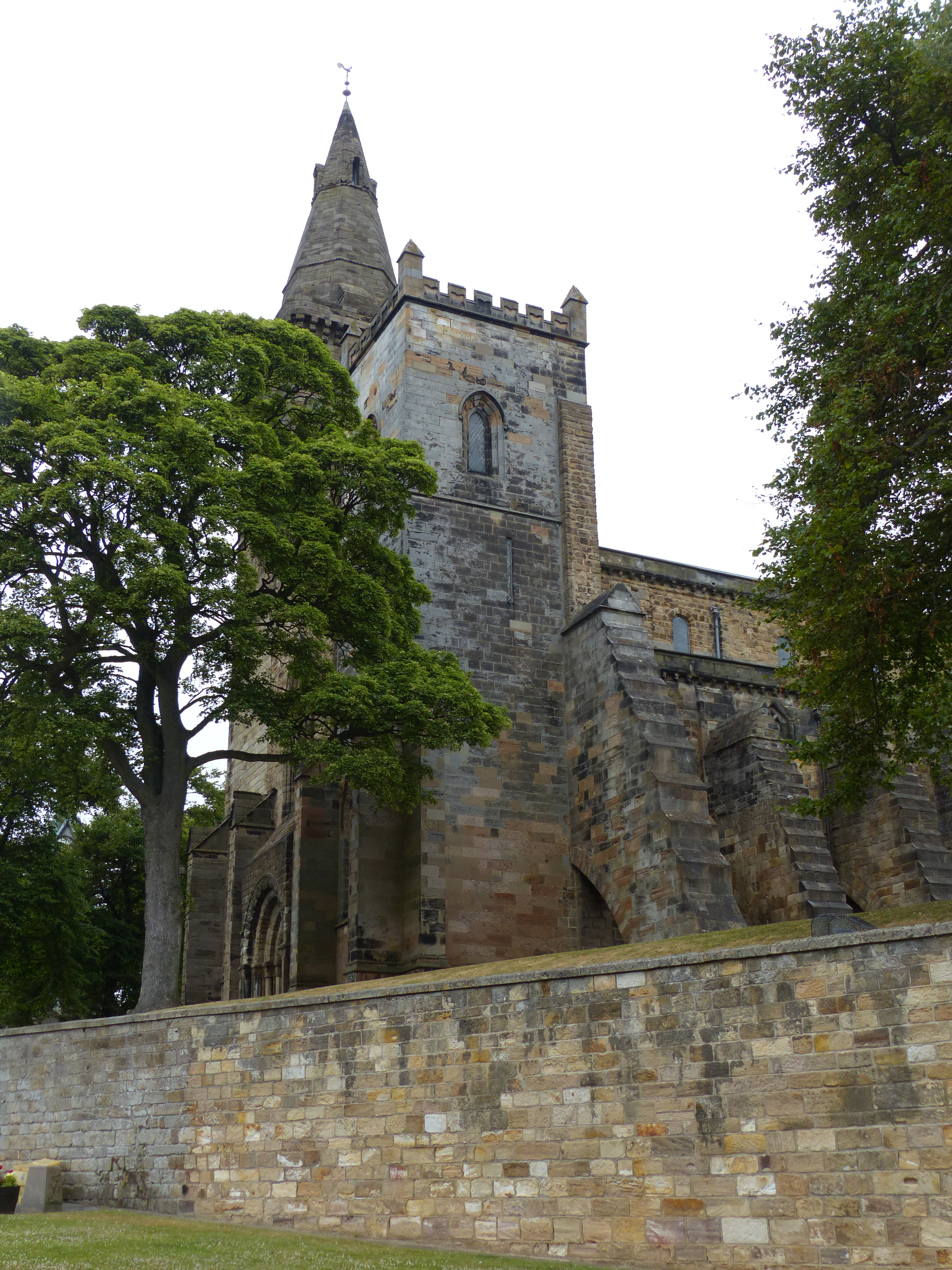
- The Romanesque nave survives, and a parish church opened in 1821 stands on the site of the medieval choir.
- Margaret, David I, Alexander III, and Robert I were buried here, and the abbey was a royal mausoleum for more than two centuries.
- Edward I held his court in the abbey in the winter of 1303, and most of the buildings were burned when he left.
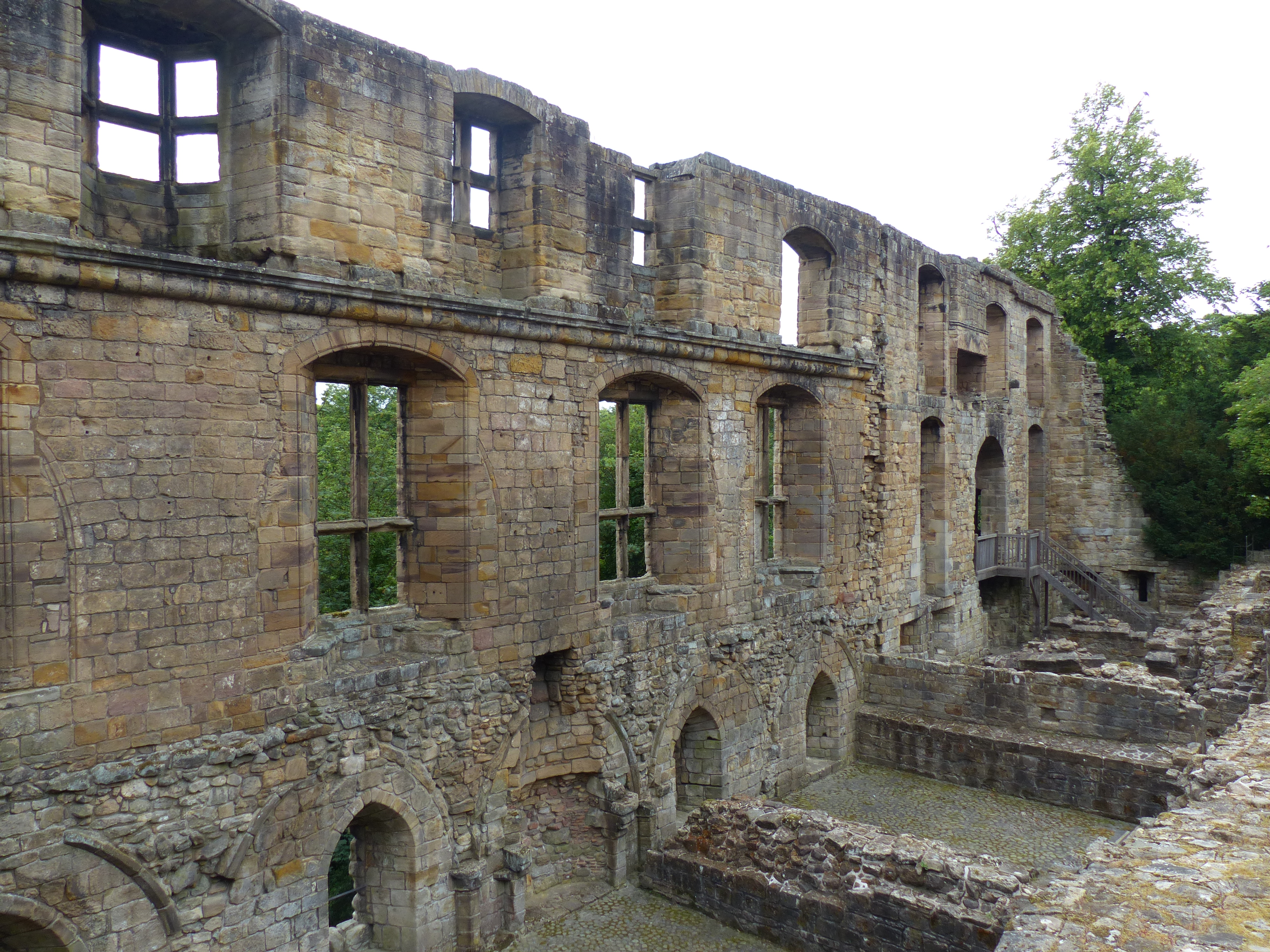
- The adjoining palace, made from the abbey guest house, was the birthplace of Charles I in 1600.
- Radar surveys from 2016 to 2022 traced the lost choir and raised new questions about the grave opened in 1818.
Visiting
The nave and grounds are open daily from 10:00 to 16:30 between 1 April and 30 September. From 1 October to 31 March the site is closed on Monday and Sunday and open from 10:00 to 16:00 on the other days. Last entry is 30 minutes before closing in summer and 45 minutes before closing in winter. A current winter notice gives last entry at 15:45.
Entry is free and donations are welcome. Entry is best secured by booking ahead. Visitors are not allowed to enter the palace while conservation work continues. Opening hours for the abbey church may change for services, and that can affect entry to the tomb.
The site is closed on 25 December and remains closed until 4 January. Assistance dogs are allowed to enter. The church is open for morning worship at 10:30 on Sundays.
History
Dunfermline Abbey occupies high ground in Dunfermline, above the gorge that falls toward the Forth. Malcolm III, called Canmore, kept a tower a few hundred yards west of the later palace, and a small defended settlement is placed here at the time of his marriage. His queen, Margaret, born in Hungary about 1045 and a granddaughter of Edmund Ironside, reached Scotland after the Norman conquest. The marriage had taken place by the end of 1070.
Margaret reformed worship, established ferries for pilgrims crossing to St Andrews, and used a cave on the Tower Burn for prayer. The start of the Benedictine house is dated both to 1070, when she is said to have brought monks from Canterbury, and to 1072. Another account reserves the foundation of the abbey itself to 1128 and says the community later claimed her as founder through a fabricated charter. The earliest church, the Holy Trinity, lies under the twelfth-century nave.
Digging in 1916 found a building about twenty-six metres long, with a west tower, a nave, and an eastern apse, and the footings of two still earlier structures.
Malcolm and his son Edward were killed at Alnwick on 13 November 1093. Margaret died three days later and was buried before the high altar. Malcolm’s body was reburied in Alexander I’s reign, either here or possibly on Iona. Edgar, Alexander I, and Alexander’s queen Sybilla were buried at Dunfermline.
One account gives Alexander the two towers of the western entrance, which would belong to the church that stood before David’s rebuilding.
David I, youngest son of Malcolm and Margaret, had been shaped at the English court. He took the kingdom in 1124 and fought his nephew, and Óengus of Moray, for control of the north. In 1128 he raised the priory to an abbey and built a new church whose nave piers resemble those of Durham. Geoffrey of Canterbury was the first abbot.
Richard Oram has traced the grants of land at Penick, of every seventh seal from the shore at Kinghorn, and of half the oil from whales and large fish taken between the Forth and the Tay for the altar lamps. The house came to hold four burghs, three courts of regality, and land from Moray to Berwickshire, with twenty-six altars. David died at Carlisle in 1153 and was buried before the high altar. His queen Maud and their grandson Malcolm IV lay here as well.
Pilgrims came for Margaret. Innocent IV canonised her, though the year is given as 1249, as 1250, and as 1251. On 19 June 1250 her remains were translated, and Malcolm’s were laid beside hers after the reliquary was said to have become too heavy to pass his grave. The abbey became a royal mausoleum once Iona had passed to Norway.
Seven kings are counted here by 1329. Alexander III, his first wife, and two sons were among them. He was killed on 19 March 1286, thrown from his horse on the dark road to Kinghorn, and the succession crisis that followed led to war with England.
Edward I held his court in the abbey in the winter of 1303, and most of the buildings were burned when he left the next year. Robert I paid for the rebuilding. The refectory, still represented by its south wall and a great window, was the showpiece. His queen, Elizabeth de Burgh, died in a fall from her horse at Cullen in 1327 and was buried under the high altar in an alabaster tomb.
Robert died at Cardross on 7 June 1329. His heart was carried toward the east and buried at Melrose. His body was brought to Dunfermline with a great provision of wax for candles and laid in a vault before the altar, in a gilded tomb ordered from Paris. That tomb was destroyed in the Reformation.
Fragments are in the Museum of Scotland.
Later graves include his daughter Matilda, Anabella Drummond in 1401, and Robert Stewart, duke of Albany, in 1420. Anabella lived at Dunfermline in her last years, and her son, the future James I, was raised in her household. Robert III chose Paisley for himself. Robert Henryson, the poet of the Morall Fabillis and The Testament of Cresseid, is associated with the burgh and, if the charters of 1478 are his, with the abbey’s writing office and its grammar school.
George Durie, abbot from the 1520s and in full office from 1539, opposed the new teaching and was blamed, with others, for the disaster at Pinkie. The church was cleansed by September 1559 and sacked in March 1560, in the same crisis that ended the old mass and papal authority in parliament that summer. By 1563 the choir and shrine chapel were roofless. Durie removed the bodies of Margaret and Malcolm to Craigluscar.
Margaret’s head later went to Edinburgh Castle and then to Douai, where it was lost, and other remains were taken to the Escorial. The nave was repaired in 1570 by Robert Drummond of Carnock and became the parish kirk. Robert Pitcairn, commendator, was buried in the north aisle in 1584.
The east end and the central tower collapsed in stages between 1672 and 1753. John Slezer’s engraving of 1693 shows the church before the last of those falls. The guest house had long been a royal lodging. James IV remodelled it around 1500.
In 1589 James VI gave it to Anne of Denmark, also called Anna. She bore Elizabeth, Charles, and Robert there. Charles, born in 1600, was the last monarch born in Scotland. William Schaw, chamberlain of her lordship, was credited with a steeple, a north porch, and buttresses, and his tomb remains in the abbey.
After 1603 the court left. Charles II was the last monarch to stay, in 1650. By 1708 the palace was unroofed. The kitchen, cellars, and south wall remain, and the ruins are closed for conservation.
William Burn’s Perpendicular church, opened in 1821, stands on the choir. On 17 February 1818 workmen found a lead-cased skeleton under the site of the high altar, with a crown shaped in the lead, and it was reburied on 5 November 1819. A brass of 1891 marks the vault, and the king’s name is cut around the tower. Radar surveys in 2016, 2017, 2019, and 2022, led by Michael Penman and Erica Carrick Utsi, traced the lost choir, more than fifteen possible elite burials, the high altar, and a forgotten chapel of John the Baptist.
They also raised the possibility that the 1818 grave was a later rescue burial, or that Robert and Elizabeth first lay together farther north. In 2024 a facial model made from a skull cast was shown in the church, without visible leprosy. James Fittler’s engraving of 1804 and the Romanesque doorway uncovered in 1903 belong to the same long effort to see the medieval building. Hugh Chisholm edited the 1911 encyclopaedia account that carried the abbey’s story to a wide readership.
The congregation, whose minister since 2012 has been MaryAnn R. Rennie, asked in August 2026 that the church join the nave, refectory, chapter house, and palace in state care. Repairs are costed in the millions, and a ten-year plan speaks of many more visits than the twenty-five thousand already recorded in a year. The nine-hundredth anniversary of David’s abbey falls in 2028, and the seven-hundredth anniversary of Robert’s burial in 2029.
Entry is free. From April to September the nave and grounds are open daily, and in winter they are shut on Sunday and Monday.
Images





Detailed History
Dunfermline Abbey stands on high ground in Dunfermline, in Fife, above a gorge that falls toward the Firth of Forth. The place began as a royal residence and a church in the reign of Malcolm III and his queen, Margaret, and it became the Benedictine abbey of the Holy Trinity. The roofed Romanesque nave is the main survival of the medieval abbey church. A parish church opened in 1821 occupies the site of the medieval choir and transepts.
The ruined guest range beside it was remade as a royal palace. Worship has continued on the site since the later eleventh century, and the parish minister since 2012 has been MaryAnn R. Rennie.
Malcolm III, called Canmore, ruled from 1058 to 1093. His seat at Dunfermline was a tower a few hundred yards west of the later palace, and an account of the marriage places a small defended settlement, an oppidum, here in 1067 or 1070. In 1068 he gave refuge to English exiles from the conquest, among them Agatha, widow of Edward the Exile, and her children Edgar, Margaret, and Cristina. One tradition says a storm drove their ship to Scotland in 1068.
Another, from Symeon of Durham, places Margaret’s first meeting with Malcolm in 1070, after the Harrying of the North. Orderic Vitalis wrote that Malcolm had already sought a marriage with Margaret at the court of Edward the Confessor in 1059. The marriage itself took place by the end of 1070. Malcolm was a widower with sons, and Margaret was one of the last members of the House of Wessex.
Margaret was born in Hungary about 1045, daughter of the English prince Edward the Exile and Agatha, and granddaughter of Edmund Ironside. After Canute’s victory in 1016 the infant Edward had been sent from England, and he later supported Andrew I of Hungary. The family returned to England in 1057 when Edward was recalled as a possible heir of Edward the Confessor. Edward the Exile died soon after landing.
When the Confessor died in January 1066, Harold Godwinson was chosen king. After Harold’s death at Hastings, Edgar was proclaimed king and was never crowned. The family fled north, and Margaret’s marriage followed.
She was a reforming queen. Turgot of Durham, later bishop of St Andrews, wrote her life between 1100 and 1107 at the request of her daughter Matilda, wife of Henry I of England. He credited her with reading biblical narratives to Malcolm, with changing the start of Lent to Ash Wednesday, and with moving the weekly day of rest from Saturday to Sunday, under the guidance of Lanfranc. She fed the poor before she ate, washed their feet, and rose at midnight for the liturgy.
She established a ferry across the Forth for pilgrims going to St Andrews, which gave South Queensferry and North Queensferry their names, and another ferry at North Berwick. She used a cave on the Tower Burn in Dunfermline for prayer. She is also credited with encouraging the restoration of the abbey at Iona. A pocket gospel book associated with her, with portraits of the Evangelists, is kept at the Bodleian Library.
Malcolm had her books covered in gold and silver.
The date of the first Benedictine house is not agreed. One account says that in 1070, on the site of her marriage, Margaret founded a priory and brought a small community of Benedictine monks from Canterbury, the first Benedictine house in Scotland. Her own life says she invited the Benedictine order to Dunfermline in 1072. The parish dates its worshipping life from 1072.
Another account says the abbey itself was founded in 1128 by her son David I, on a priory of his parents’ reign, and that the house later claimed Margaret as founder by means of a fabricated charter. The earliest church, the Church of the Holy Trinity, lies under the twelfth-century nave. Excavation in 1916 found that this early church was about 26 metres long, with a west tower, a nave, and an eastern apse, in the manner of Anglo-Saxon churches, and that two earlier buildings had stood beneath the nave floor.
Malcolm and his eldest son Edward were killed on 13 November 1093 at Alnwick, in a fight with Robert de Mowbray, earl of Northumbria. Edgar brought the news to Margaret. She died on 16 November 1093, not yet fifty, and grief is the cause given. She was buried before the high altar at Dunfermline.
Malcolm’s body was carried north and reburied in the reign of his son Alexander, either at Dunfermline or possibly at Iona. Their children included Edward, Edmund, Ethelred, abbot of Dunkeld, Edgar, Alexander I, David, Matilda, and Mary. Three of the sons became kings of Scots, and Matilda became queen of England.
Edgar died in 1107 and was buried here. Alexander I, king from 1107 to 1124, married Sybilla of Normandy, a daughter of Henry I. She died at Eilean nam Ban on Loch Tay in July 1122 and was buried at Dunfermline. Alexander died in 1124 and was buried beside her.
One account says he had the two towers built that flanked the great western entrance. His brother David’s new abbey church is dated between 1128 and 1150, so the towers named for Alexander belong to the story of the earlier church as that account gives it.
David was the youngest son of Malcolm and Margaret, born about 1084. After 1093 he spent years in England, and after Henry I married his sister Matilda he was shaped at the English court. Edgar left him the lands south of the Forth. He made that inheritance good as prince of the Cumbrians from about 1113, founded Selkirk Abbey for the Tironensians, and married Matilda of Huntingdon, heir of Waltheof.
When Alexander died in 1124, David took the kingdom with Henry’s backing and fought his nephew Máel Coluim mac Alaxandair for about ten years. Óengus of Moray died in the rising of 1130. Richard Oram has described David in those early years as king of Scots in little more than name outside the south, and has traced how the struggle brought new lordships and a tighter hold on Moray.
The same reign is remembered for burghs, markets, feudal grants to Anglo-Norman and Flemish settlers, and a wave of monastic foundations in the spirit of Gregorian reform. In 1128 David raised the Dunfermline priory to an abbey and had a new church built on a grand scale. Masons from Durham Cathedral are the likely carvers of the nave piers, which resemble the piers at Durham. The first abbot was Geoffrey of Canterbury, former prior of Christ Church, Canterbury, the house that probably sent the first monks.
David died on 24 May 1153 at Carlisle Castle and was buried before the high altar at Dunfermline in early June. His queen, Maud, countess of Huntingdon, had been buried here in 1130. Their grandson Malcolm IV was buried here in 1165.
Between 1131 and 1145 David granted the abbey land at Penick near Auldearn in Nairnshire, with grazing in the woodland and open ground, and he kept the hunting for himself. Charters gave the monks every seventh seal taken on the shore of the royal estate at Kinghorn, and half the oil from whales and large fish caught between the Forth and the Tay, for the lamps of the abbey church. Richard Oram set out those grants in his account of Scotland from 400 to 1400. At its height the abbey held four burghs, three courts of regality, and lands from Moray to Berwickshire.
Twenty-six altars, given by benefactors and guilds, stood in the church for private masses. A hospital at North Queensferry belonged to the abbey and had lands from Malcolm IV. It is not mentioned after 14 July 1233. Dunfermline became a burgh in David’s reign, and the medieval streets north of the abbey can still be read.
The abbey drew pilgrims to the shrine of Margaret. Literature of her miracles was written by the monks. Pope Innocent IV canonised her for her holiness, her fidelity, her reform of the church, and her charity. One account places that canonisation in 1249, and calls her Scotland’s only officially canonised saint by that year.
Another places the canonisation in 1250, and the translation of her remains on 19 June 1250 from the first grave to a reliquary at the high altar, and then to a chapel in the eastern apse. A further account places the canonisation in 1251. On 19 June 1250, as the reliquary was carried past Malcolm’s grave, it was said to have become too heavy to move, and his remains were taken up and laid beside hers. The lower walls of a small shrine chapel east of the later parish church mark the place built for them after the canonisation, and two blocks of dark grey stone mark the tomb.
Queen Victoria later had that tomb, inside the ruined Lady chapel, restored and enclosed.
The abbey became a royal mausoleum after Iona passed to the kingdom of Norway, and one account says that, after Iona, no place in the kingdom received more of Scotland’s royal dead. Seven kings of Scots are counted here by 1329, among them David I and Robert I. The burial list also names Duncan II in 1094, Edgar, Alexander I, Malcolm IV, and Alexander III, together with Malcolm III. Gille Brigte, Adam, Gille Críst, and Donnchadh, earls of Angus, were buried here.
Alexander III was buried in 1286 with his first wife, Margaret of England, who had died in 1275, and their sons David, who died in 1281, and Alexander, who died in 1284. The deaths of those children left his granddaughter Margaret, the Maid of Norway, as heir recognised by the estates in 1284. Alexander himself died on 19 March 1286, thrown from his horse while riding in the dark from Edinburgh toward his queen at Kinghorn. He had been warned at Inverkeithing by Alexander Le Saucier and rode on.
The burial at Dunfermline closed a reign, and the succession crisis that followed opened the wars with England.
In the winter of 1303 the court of Edward I was held in the abbey. On that campaign he had come south from the north to Dunfermline, and in February 1304 the leading Scots except William Wallace submitted. On his departure the following year most of the abbey buildings were burned. Another account places the serious damage in 1303.
Robert I later paid for the rebuilding. The finest of the new work was the monks’ refectory, a tall building with an elaborate front, set on the slope. Its south wall and a large window still stand, and rooms over the gatehouse, once part of the town wall, survive with it. The rebuilding was a mark of the kingdom’s recovery after the wars.
Elizabeth de Burgh, daughter of Richard Óg de Burgh, lord of Ulster, and second wife of Robert I, died on 27 October 1327, about thirty-eight years old, after a fall from her horse at the royal residence of Cullen in Banffshire. Her body was brought to Dunfermline, the resting place of kings and queens since 1093, and laid in the centre of the church under the high altar, in an alabaster tomb picked out with gold leaf. Robert founded a chaplaincy at the Auld Kirk of Cullen and assigned five pounds Scots a year for masses for her soul. A prayer is still said for her at a Sunday service there.
Robert I had been inaugurated at Scone on 25 March 1306. He died on 7 June 1329 at his manor of Cardross, near Dumbarton, and was succeeded by his son David II. He asked that his heart be taken from his body, carried by James Douglas toward the Holy Sepulchre, and buried at Melrose on its return. The viscera were buried at the chapel of St Serf in Cardross parish, in what is now Levengrove Park.
The embalmed body travelled east in a carriage hung with black cloth, with recorded stops at Dunipace and Cambuskenneth. Four hundred and seventy-eight stone of wax were bought for the funeral candles. Robert Stewart and knights in black walked the last of the way into the abbey. A canopy of Baltic timber stood over the grave, and the body, in a wooden coffin, was placed in a stone vault before the high altar.
He had endowed perpetual masses at Dunfermline and elsewhere. The tomb, ordered from Paris, was of gilded alabaster. It was destroyed in the Reformation. Fragments found in the nineteenth century are in the Museum of Scotland.
His heart went with Douglas to Spain, where Alfonso XI of Castile was fighting the kingdom of Granada, and after Douglas was killed the heart was brought back to Melrose.
English and Hainault chroniclers said Robert died of leprosy, or of the “unclean sickness,” and Jean Le Bel wrote of “la grosse maladie” in 1327. Scottish accounts of the death do not say this, and the word was used loosely for severe skin disease. When the grave was opened in the nineteenth century, the physicians who saw the skull attributed missing teeth to battle wounds rather than to leprosy. A later study of a skull cast and a foot bone found none of the nasal or pedal changes associated with the disease.
Two digital likenesses were afterwards made, one with a mild representation of the disease and one without.
Matilda, daughter of Robert I, was buried here in 1353. After 1371 the Stewart kings increasingly chose other churches. Anabella Drummond, also recorded as Annabella, was queen of Scots as the wife of Robert III from 1390 until her death, and she was buried at Dunfermline in 1401. She was the daughter of John Drummond of Concraig and Mary Montifex, traditionally said to have been born at Dunfermline about 1350.
Her aunt Margaret Drummond became the wife of David II, and in 1365 David gave Annabella twenty pounds while she was at Stirling. A papal dispensation of 13 March 1366 allowed her marriage to John Stewart of Kyle, grandson of Robert I. They were married by April 1367. John became earl of Carrick, regent in 1384, and king as Robert III in 1390, after a kick from a horse had left him impaired.
Annabella was crowned at Scone on 15 August 1390. Parliament gave her 2,500 merks a year. She pressed the claim of her son David, duke of Rothesay, and in her last years she lived mainly in eastern Scotland, particularly at Dunfermline, where her youngest son James was raised in her household. She died at Scone in the autumn of 1401, “the harvest time” in Andrew of Wyntoun’s words, and was buried here.
Robert III chose Paisley Abbey for himself rather than a grave beside her. Robert Stewart, duke of Albany, was buried at Dunfermline in 1420. Bishop James Bruce was buried here in 1447.
Robert Henryson, a poet of the Northern Renaissance, lived in the royal burgh in the decades around 1460 to 1500 and is the best-known name at the abbey who was not royal. Little of his life is fixed. A man of his name was licensed to teach and took a post at the new University of Glasgow on 10 September 1462, which would mean he had studied arts and canon law. Early references place him in Dunfermline.
In 1478 a man of his name witnessed abbey charters, which would make him a notary of a house that managed a great estate. He is called schoolmaster, and a confirmation of 1468 provided a house for a priest who taught grammar, and for scholars, including poor scholars taught free. If these notices are the poet, he served the abbey and the burgh school. His surviving verse is nearly five thousand lines in Middle Scots, above all the Morall Fabillis, The Testament of Cresseid, and the tale of Orpheus.
The court still came to residences joined to the abbey, but no record places Henryson in the royal household.
The Scottish Reformation ended the monastery. From the 1520s Protestant teaching spread. In 1546 Cardinal David Beaton had George Wishart burned at St Andrews, and was himself killed in the castle. George Durie, abbot of Dunfermline, was active in the effort to avenge that killing.
He had been born about 1496, son of John Durie of Durie in Fife, and brother of Andrew Durie, bishop of Galloway. From 1527 he used the title of abbot while his uncle, Archbishop James Beaton, was titular, and in 1539 James V gave him the office in full. He sat in parliaments, kept the privy seal when Mary of Guise became regent in 1554, and was a privy councillor at the time of the Battle of Pinkie in 1547. John Knox and later writers blamed the disastrous move of the Scottish army on local men including George Durie and Hugh Rig of Carberry.
An English eyewitness, William Patten, described a banner taken on the field as that of the abbot, under which the churchmen had fought. Durie urged Mary, Queen of Scots, not to set religion aside when she returned from France. He died in October 1577, by then suffering from senility, and a memorial stands in the north aisle.
The abbey church had a first Protestant cleansing by September 1559 and was sacked in March 1560. That was the year the Lords of the Congregation, with English help, broke the French-backed regency. Mary of Guise died in June. The Treaty of Edinburgh in July removed French and English troops.
In August parliament adopted a Protestant confession, abolished papal jurisdiction, and made the mass a criminal offence, though Mary withheld royal assent until 1567. By September 1563 the choir and the feretory chapel at Dunfermline were roofless, and the nave was said to be so damaged that it was dangerous to enter. Medieval glass, images, and the Paris tomb of Robert I were among the losses. George Durie removed the bodies of Margaret and Malcolm to his estate at Craigluscar to keep them from the iconoclasts.
In 1560 Mary, Queen of Scots, had Margaret’s head taken to Edinburgh Castle as a relic for childbirth. In 1597 the head passed to the Jesuits at the Scots College at Douai, and it was lost in the French Revolution. By 1580 Philip II of Spain had the other remains moved to the Escorial, and their present place is unknown. The nave was spared as a building and was repaired in 1570 by Robert Drummond of Carnock.
It became the parish kirk. The choir was left to fall.
Robert Pitcairn, born about 1520, cousin of George Durie, archdeacon of St Andrews, and a Protestant administrator, was commendator of the abbey. He helped to arrange the Ruthven Raid, the seizure of James VI, on 23 August 1582. In January 1583 the abbacy was granted to his nephew Henry, with the life-rent kept for himself. After James escaped, Pitcairn was held at Lochleven and then restricted to Dunfermline.
He died on 18 October 1584 in his sixty-fourth year and was buried in the north aisle, with a Latin epitaph calling him the hope and pillar of his country. After the Master of Gray lost the abbacy in 1587, Henry Pitcairn entered into it.
Parts of the east end collapsed in 1672. Part of the central tower is said to have fallen in 1716, the east gable in 1726, and the central tower at last in 1753. John Slezer, a German-born military engineer who came to Scotland in 1669 and surveyed the kingdom’s fortifications, published Theatrum Scotiae in 1693. An engraving of the abbey in that year is his.
His death is given as 24 June 1714, and also as 1717. The nave remained the parish church until the new building of the nineteenth century, and it is now the vestibule of that church.
The monastic guest house had long served royal lodging. Timber for royal lodgings was bought in 1429. David II and James I were born at Dunfermline. The standing palace walls largely follow the remodelling by James IV around 1500.
He and Margaret Tudor stayed often. In November 1504, while he was in the north, two people at the palace were suspected of plague. Margaret left for Edinburgh with her household, including African women known as the More lasses, who went first to Inverkeithing. The alarm was false.
James V and Mary of Guise used the palace. On 14 June 1562, after dinner at Dunfermline, Mary, Queen of Scots, showed a gold ring set with a heart-shaped diamond and said she would send it to Elizabeth with verses she had written in Italian, at a time when a meeting of the two queens was being discussed.
James VI stayed in June 1585 to escape plague in Edinburgh and fixed prices for his courtiers in the town. In 1589 he gave the palace to his bride, Anne of Denmark, also called Anna, as a wedding gift, and he compensated the Master of Gray, who had the commendator’s title, with 12,000 merks from a subsidy paid by Elizabeth I. Anne received the old abbey lands and was called the Lady of Dunfermline in their charters. Alexander Seton was her bailie, keeper, and constable from February 1596.
William Schaw was one of the chamberlains. She gave birth in the palace to Elizabeth in 1596, Charles in 1600, and Robert in 1602, attended by her German physician Martin Schöner. A new cruciform building, the Queen’s House, was finished in 1600, with a pend through the basement. It was demolished in 1797.
A tennis court stood in the old cloister. Charles, born in November 1600, was the last monarch born in Scotland. A local gentlewoman, Margaret MacBeth, widow of Henry Durie of Craigluscar, is said to have attended the births with herbal remedies. A new green velvet and taffeta bed was made for Anne that November.
William Schaw, master of works to the crown, was granted the chamberlainship of the lordship of Dunfermline on 6 July 1593. Alterations at the abbey were attributed to him: a steeple, a porch at the north door, and some of the outer buttresses. He had travelled to Denmark with James in 1589 and directed works at the palace for Anne in 1590. He died in 1602.
Alexander Seton and the queen paid for his tomb in the abbey, and Seton composed the Latin inscription, which remains a principal source for his life. The tomb can still be seen. In 1599 he issued statutes for the masons’ lodges of Scotland.
After the union of the crowns in 1603 the court left for London. Prince Charles, a sickly child, stayed at Dunfermline for a year under Alexander Seton and Grissal Leslie, with Jane Drummond to care for him and Marion Hepburn to rock the cradle. An oak stool with wheels was made to teach him to walk. In July 1604 Henry Atkins wrote that the boy could walk the length of the great chamber several times a day without a stick.
Charles left on 17 July 1604. In 1616 ten tapestries from his infancy were still in the palace. In 1618 the poet John Taylor lodged with the keeper John Gibb and called the queen’s palace a delicate mansion, with the ruins of a stately abbey, gardens, orchards, and meadows. Anne died in 1619 and the lordship passed to Charles.
A fire in the town on 25 May 1624 brought £500 sterling from him in aid. He returned in 1633 for his Scottish coronation and made only a brief visit to his birthplace. The last monarch to stay was Charles II, in 1650, just before the Battle of Pitreavie. During the occupation that followed, the palace was abandoned, and by 1708 it was unroofed.
What remains is the kitchen, the cellars, and the great south wall looking over the Forth. The ruins are closed while conservation continues, and they can be seen from the street.
The new parish church, in the Perpendicular style, was built between 1818 and 1821 on the choir and was designed by William Burn. He was born in Rose Street, Edinburgh, on 20 December 1789, son of the architect Robert Burn, trained in London with Robert Smirke from 1808, and opened his own practice in Edinburgh in 1812. He died in London on 15 February 1870. On 17 February 1818, workmen clearing the choir for his church found a vault before the site of the high altar.
Two large flat stones covered it, one a headstone and one about seven feet long with six iron rings. The vault was about seven feet long, twenty-two inches wide, and eighteen inches deep. Inside a decayed oak coffin lay a body enclosed in lead, with a decayed shroud of cloth of gold, and the lead over the head was shaped as a crown. Marble and alabaster fragments nearby were linked to the Paris tomb.
The skeleton was laid on the coffin board on top of a lead coffin, and the crowd was allowed to file past. Teeth and finger bones were said to have been taken. Henry Jardine and James Gregory are among the eyewitnesses. In 1819 Gregory, Jardine, and the surgeon Robert Liston described the skull as almost perfect apart from missing teeth, which they put down to wounds.
On 5 November 1819 the remains were reburied in a new lead coffin, into which 1,500 pounds of molten pitch were poured. The government did not mark the grave. In 1891 the pulpit was moved and a monumental brass, paid for by Bruce descendants, was set in the floor. Carved letters spelling King Robert the Bruce run around the parapet of the nineteenth-century tower.
A memorial window of 1974 in the north transept marks the seven-hundredth anniversary of his birth.
A radar survey led by Michael Penman and Erica Carrick Utsi, invited by the kirk session, examined the ground under and around the church in 2016, 2017, 2019, and 2022, because the medieval choir could not be dug up while the parish church stood on it. The scans, using two frequencies and reaching about two metres down, were read against medieval evidence, antiquarian notes from about 1560 to about 1879, and the plans of comparable Benedictine choirs. They produced a cautious plan of the lost choir: more than fifteen possible elite burials, concentrated on the fourteenth-century Lady chapel and aisle and on the eastern pilgrimage shrine of about 1250; evidence for the lost high altar; and a southern transept chapel and aisle of St John the Baptist that had not been noticed. The grave found in 1818 sits, on this reading, too close to the screened high altar to have been the original burial, where it would have blocked the chancel steps and the sight of the mass.
One possibility is that monks who stayed until about 1580 moved the bones into a shallow grave after a box tomb was destroyed, which would fit a lead shroud of the later sixteenth or seventeenth century. Another possibility is that Robert and Elizabeth first lay together in a double tomb in the northern part of the presbytery. Not every anomaly can be dated with the same confidence, and fixed pews limited where the instruments could pass. An expanded report of the survey appeared in 2024, and a journal study in 2025 set out the same comparison of radar and written history.
In 2024, for the seven-hundred-and-fiftieth anniversary of Robert’s birth, a three-dimensional model of his face, made from a cast of the skull kept at the Hunterian Museum, was shown at the abbey from 29 July to 7 December. Martin MacGregor and Caroline Wilkinson led the work, with a laser scan of the muscle attachments. The cast shows a prominent chin and a square jaw, and a strong neck if the skull is his. The nose is the least certain part, because the bone is damaged.
The physical model shows no visible leprosy. An earlier reconstruction had shown wounds and the facial changes of the disease. Andrew Nelson and Christian Corbet, working from a cast the family believes to be the original, concluded in 2016 that the disease was not present.
James Fittler, an English engraver born in London in October 1758 and marine engraver to George III, cut a view of the abbey and its mill for Scotia Depicta, published in 1804. He died on 2 December 1835. In 1903, masons cutting a place in the south wall for a memorial to soldiers killed in the Second Boer War uncovered another rich Romanesque doorway. The memorial was moved so that the doorway could remain.
Private gifts have filled windows with stained glass. The Carnegie Tiffany window was commissioned by Andrew Carnegie. The door and the right-hand side of the abbey were cited as a model for the Afghan Church of St John the Baptist in Mumbai. In 1949 Robert Kemp’s pageant The Saxon Saint, on Margaret’s arrival in 1068, was played in the nave for the Edinburgh International Festival.
Hugh Chisholm, born in London on 22 February 1866 and editor of the eleventh edition of the encyclopaedia published in 1911, edited the account of Dunfermline that recorded the abbey, the nave, and the royal burials for that generation of readers. He died on 29 September 1924.
Under the south transept, the Elgin vault holds Charles Bruce, fifth earl of Elgin; William Robert Bruce, sixth earl of Elgin and tenth earl of Kincardine, who died in childhood between 1764 and 1771; George Charles Constantine Bruce, Lord Bruce, who died in 1840; Sir Frederick William Adolphus Bruce, who died in 1867; and Major General Robert Bruce, who died in 1862.
In 1993 a watching brief on narrow trenches for lighting, north of the church, found recumbent grave slabs of the period after the Reformation, two possible walls, and a paved surface of fire-reddened sandstone flags. Trenches on the south, along Monastery Street and just inside Pittencrieff Park, ran through ground already disturbed and found nothing of note.
In 2025 the high masonry was inspected by hand, including the spire of about forty metres, with abseiling and a platform seventy-three metres tall. In August 2026 the General Trustees of the Church of Scotland asked the state body that already cares for the nave, the refectory, the chapter house, the palace ruins, and the grounds to consider taking the Abbey Church into state care as well. The congregation of about 413 members has been spending about £60,000 a year to keep the church open, faces about £4 million of repairs over three to five years to keep it wind and watertight, and a further £4 million to improve facilities. A ten-year plan, costed at about £18 million and backed by the town’s area committee, speaks of trails, interpretation, space for events, and a possible welcome building, with a hope of 80,000 visits a year.
The congregation itself records more than 25,000 visits a year, and says that ministry and upkeep depend on the congregation and on visitors’ gifts. The church would remain a place of worship. The nine-hundredth anniversary of the abbey falls in 2028, and the seven-hundredth anniversary of Robert I’s burial in 1329 falls in 2029.
The nave and grounds are open to visitors. From 1 April to 30 September the site is open daily from 10:00 to 16:30. From 1 October to 31 March it is closed on Monday and Sunday and open from 10:00 to 16:00 on the other days. Last entry is 30 minutes before closing in summer and 45 minutes before closing in winter, while the parish’s current winter notice gives last entry at 15:45.
The site is closed on 25 December and stays closed until 4 January. Entry is free and donations are welcome. Advance booking is recommended. Visitors are not allowed to enter the palace during the conservation closure.
The abbey church is a working church, so opening hours change for services, and that can affect entry to the tomb of Robert I. Assistance dogs are allowed to enter. Morning worship is at 10:30 on Sundays, with Matthew Beetschen as master of music, and communion on the second Sunday of March, June, September, and December. The Romanesque west door, the piers of the nave, the refectory wall, the gatehouse, the palace’s south wall, and the brass over the royal vault are the parts of this long history that a visitor can still see in one place.
Sources
- Dunfermline Abbey — Wikipedia
- Saint Margaret of Scotland — Wikipedia
- Malcolm III of Scotland — Wikipedia
- David I of Scotland — Wikipedia
- Robert the Bruce — Wikipedia
- Dunfermline Palace — Wikipedia
- George Durie — Wikipedia
- Annabella Drummond — Wikipedia
- Robert Henryson — Wikipedia
- William Schaw — Wikipedia
- Elizabeth de Burgh — Wikipedia
- Scottish Reformation — Wikipedia
- Dunfermline Abbey and Palace: history — Historic Environment Scotland
- Dunfermline Abbey and Palace: plan your visit — Historic Environment Scotland
- Come face to face with Robert the Bruce — Historic Environment Scotland
- The Many Faces of Robert the Bruce — Historic Environment Scotland
- Research uncovers secrets of historic Dunfermline Abbey — University of Stirling
- Dunfermline Abbey GPR Project, 2016-22 — University of Stirling
- Historic church with links to King Robert the Bruce could be taken into state care — Church of Scotland
- Dunfermline Abbey — Dunfermline Abbey Church
- Visit us — Dunfermline Abbey Church
- Dunfermline Abbey — Historic Environment Scotland
- Dunfermline, St Margaret's Street, Dunfermline Abbey — Canmore
- Dunfermline Abbey - Project Gutenberg eText 17976.jpg — Wikimedia Commons
- Dunfermline Abbey Geograph.jpg — Wikimedia Commons
- Dunfermline Abbey 2025.jpg — Wikimedia Commons
- Abbey and Monastery - geograph.org.uk - 402853.jpg — Wikimedia Commons
- Abbey Fife.jpg — Wikimedia Commons
- Abbey Flower Bed (5703173892).jpg — Wikimedia Commons
- Abbey & Palace (5702600927).jpg — Wikimedia Commons
- 2018 07 09 Schottland (8).jpg — Wikimedia Commons
- 2018 07 09 Schottland (6) Dunfermline Abbey Palace.jpg — Wikimedia Commons
- 2018 07 09 Schottland (9).jpg — Wikimedia Commons