Fortification
Dinefwr Castle
Grade I listed building in Llandeilo, Wales

Llandeilo, United Kingdom · United Kingdom
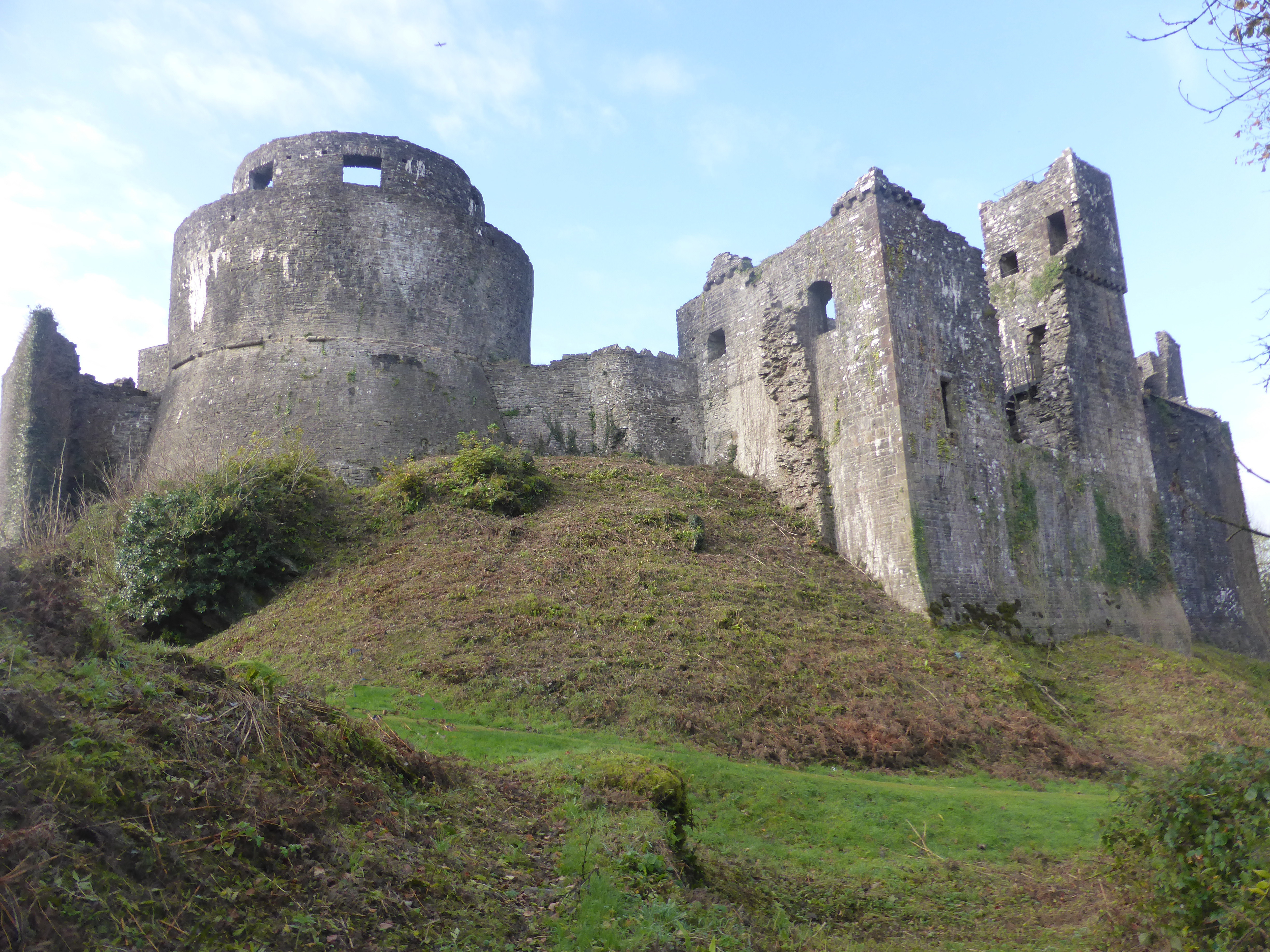
- Dinefwr Castle, also called Castell Dinefwr and Old Dynevor Castle, stands on a ridge above the River Towy near Llandeilo, with a drop of about a hundred feet to the water.
- It was the chief seat of Deheubarth, linked with Hywel Dda and rebuilt in the time of the Lord Rhys and his son Rhys Gryg.
- English forces took it in the wars of Edward I, it was attacked in the revolt of Llywelyn Bren, and the forces of Owain Glyndŵr besieged it in 1403.
- A round keep, curtain and north tower survive, and the keep was later made into a summer house that burned in the eighteenth century.
- The ruin lies in Dinefwr Park, entry is free, and the castle is open from 10:00 to 16:00 with last admission half an hour before closing.
Visiting
Entry is free. The site is open from 10:00 to 16:00 from 1 April to 31 March, and last admission is 30 minutes before closing. It is closed on 24, 25 and 26 December and on 1 January. Dogs on short leads are allowed to enter the ground-floor levels.
Visitors are not allowed to smoke. The castle is also given as open from dawn to dusk.
History
Dinefwr Castle, also called Castell Dinefwr and Old Dynevor Castle, stands on a ridge on the northern bank of the River Towy near Llandeilo. The ground falls about a hundred feet from the rock to the river. It was the chief seat of the dynasty that ruled Deheubarth, and the masonry is listed at Grade I.
Tradition gives the first castle to Rhodri the Great, but no remains have been dated to his lifetime, and the evidence neither proves nor disproves a fortification before the later twelfth century. Another account places him on the hill in the ninth century. Hywel Dda, his grandson, who died about 949 or 950, is named as the first ruler of Deheubarth, with this rock as his chief seat.
Rhys ap Gruffydd, the Lord Rhys, ruled Deheubarth from 1155 to 1197 and is thought to have rebuilt the castle, or to have founded it soon after he held Cantref Mawr in 1163. Giraldus Cambrensis called it the royal seat of the princes of South Wales. He told how a knight from Brittany, led by Guaidanus, dean of Cantref Mawr, was taken by the hardest paths, and how the dean ate grass before Henry II of England released Rhys.
Rhys Gryg captured the castle in 1195, while his father was still alive, and he is also said to have received it at his father’s death. His death is given as 1233 and as 1234, and he is called the probable builder of the stone castle. Llywelyn the Great is said to have restored the castle after Rhys dismantled it, and to have held it until 1240.
The walls that stand are mostly thirteenth-century work on a twelfth-century plan: an outer ward, a round keep with a battered base, a north tower probably added after 1277, and a hall altered in the Tudor period. The original door of the keep was on the first floor. A summer house was later set on the keep, and it burned in the eighteenth century.
English possession is dated to 1277, to 1280 and to 1287. Rhys ap Maredudd quitclaimed the castle in October 1283, seized it in the revolt of 1287, and was executed at York on 2 June 1292, a date also given as 1291. The castle was attacked in the rising of Llywelyn Bren in 1316, given in 1317 to Hugh Despenser, called the king’s favourite, and besieged without success by the forces of Owain Glyndŵr in 1403.
Sir Rhys ap Thomas held the castle late in the fifteenth century and rebuilt extensively. His grandson was executed in 1531, the castle was confiscated, and the family later recovered it. Newton House was completed about 1660, the same year the keep was adapted as a summer house.
A small town of clerks stood by the gate, and after 1280 a new borough was laid out nearer the later house. Burgage numbers are given as 26 in 1298, as 13 and 35 in 1302, and as a new-town rent of at least 46 burgesses in 1360. Test pits beside the castle found boundaries but no medieval objects, a brief inside the walls in 1997 found nothing, and Roman forts in Dinefwr Park, investigated from 2003 to 2007, are a separate monument.
The ruin stands in Dinefwr Park, an estate of about 800 acres that has been a parkland national nature reserve since 2007. One account gives the castle to a wildlife trust, and another gives it to the body that holds the park. Entry to the castle is free, it is open from 10:00 to 16:00 with last admission thirty minutes before closing, and it is also given as open from dawn to dusk.
Images


Detailed History
Dinefwr Castle, in Welsh Castell Dinefwr and in an older English form Old Dynevor Castle, is a ruined stone castle on a ridge on the northern bank of the River Towy, also written Tywi and Tywy, just outside Llandeilo in Carmarthenshire. The ground falls about a hundred feet from the rock to the river. The place was the chief seat of the dynasty that ruled the kingdom of Deheubarth, the south-western realm of medieval Wales. The castle is a Grade I listed building.
The scheduling record gives no date of designation. It is not described in these records as a world-heritage inscription.
The name has at least twenty-two recorded spellings, among them Dynefwr, Dynevor, Dinevor and Dinefawr, and from the thirteenth century the new borough was also called Newton, or in Welsh Y Drenewydd. Both the medieval ruin and the later mansion have at times been called Dinefwr Castle. Since the park and the house passed into conservation care, usage has settled toward Newton House for the mansion, Dinefwr Castle for the ruin, and Dinefwr Park for the ground around them. Dinefwr Park is an estate of about 800 acres, or 320 hectares, about a mile from the centre of Llandeilo.
Its highest point is the castle rock. The park is a Grade I historic park, a Site of Special Scientific Interest, and, since 2007, the only parkland national nature reserve in Wales. It holds more than 300 trees at least 400 years old, ancient pasture, fallow deer, and a herd of rare white park cattle said to have been in the district for more than a thousand years and to appear in the laws of Hywel Dda.
Tradition says that a castle was first raised here by Rhodri the Great. No archaeological remains have been dated to his lifetime, and the scheduling account says there is nothing in the surviving evidence to argue either for or against a fortification before the later twelfth century. Another account of the same hill says the site was first occupied by Rhodri in the ninth century and was afterwards the chief castle of Deheubarth. Rhodri ap Merfyn, Rhodri Mawr, was king of Gwynedd and the Isle of Man from 844 until 878.
He was the son of Merfyn Frych and of Nest, daughter of Cadell ap Brochfael of Powys. In 856 he slew a viking leader named Orm. In 877 he was driven to Ireland after a defeat in Anglesey, and in 878 he was killed, with his son Gwriad, by the forces of Ceolwulf II of Mercia. His sons Anarawd and Cadell afterwards spread the family’s power.
Cadell was set over Seisyllwg after the drowning of its king Gwgon in 872, because Rhodri, husband of Gwgon’s sister Angharad, could install a son though he could not himself take that kingship. The later claim that Rhodri built at Dinefwr therefore sits beside a life spent in Gwynedd, Man and conflict with Mercia and the Norse, and beside a hill that has not produced remains dated to his reign.
Hywel Dda, Hywel ap Cadell, who died about 949 or 950, was Rhodri’s grandson through Cadell. He is called the first ruler of Deheubarth and later king of most of Wales, and Dinefwr is named as his chief seat. He was born in the late ninth century, son of Cadell ap Rhodri of Seisyllwg, with a brother Clydog. He was reputed to have married Elen ferch Llywarch, treated as heiress of Dyfed, a marriage later used to justify his rule there.
Cadell died around 909. Hywel and Clydog submitted jointly to Edward the Elder in 918. Clydog died in 920, and Hywel joined Seisyllwg and Dyfed into the single realm called Deheubarth, a name meaning the right-hand part, the south. Latin writers rendered it dextralis pars or Britonnes dexterales rather than as a kingdom on the model of Gwynedd.
Hywel’s dynasty fortified a base at Dinefwr, near Llandeilo, and took their name from it. In 928 he went to Rome, the first Welsh prince said to have made that journey and returned. His wife Elen is placed in that year or in 948 or 951. He supported Æthelstan’s invasion of Scotland in 934 and did not send men to the alliance that met Æthelstan at Brunanburh in 937.
He is remembered for the laws later called the Laws of Hywel Dda. Prologues say he gathered lawyers and priests at Whitland, Tŷ Gwyn ar Daf, to revise the law of Wales. No law manuscript is dated to his lifetime, and it is thought unlikely that the assembly happened as the later, longer prologues tell it. The epithet Dda, the Good, was attached to the justice of those laws.
After his death in 949 or 950 the realm split. His laws remained in use for criminal cases in Wales until the English conquest of 1283, and in civil cases until the Laws in Wales Acts of 1535 and 1542.
After Hywel, Dinefwr was overrun more than once. Llywelyn ap Seisyll of Gwynedd came in 1018, Rhydderch ab Iestyn of Morgannwg in 1023, and Gruffydd ap Llywelyn of Gwynedd in 1041 and 1043. In 1093 Rhys ap Tewdwr, who had recovered the dynasty’s hold on the south, was killed resisting Norman expansion into Brycheiniog, and his son Gruffydd was driven into exile. The long rule of Gruffydd’s son, the Lord Rhys, briefly restored a southern hegemony.
On that prince’s death in 1197 he divided the land among several sons, and none of them again matched his power. By the time Llywelyn the Great was dominant in Gwynedd, the lords of Deheubarth appear among his clients.
Rhys ap Gruffydd, also written Rhys ap Gruffudd, the Lord Rhys, was born about 1132 and died on 28 April 1197. He ruled Deheubarth from 1155 to 1197 and in two surviving charters called himself prince of Wales or prince of the Welsh. He is thought to have rebuilt Dinefwr. A town record says he founded the castle soon after he came into possession of Cantref Mawr in 1163, while what survives of the masonry belongs to later centuries.
His own life places the harsh settlement of 1158 as the moment he was left with Cantref Mawr. He was the fourth son of Gruffydd ap Rhys and Gwenllian ferch Gruffudd. In 1146 he fought with his brothers at the capture of Llansteffan. Maredudd died in 1155 and Rhys became ruler.
Henry II of England prepared an invasion of Deheubarth in 1158. Rhys was stripped of everything but Cantref Mawr. He was seized and taken to England in 1163, then released after a few weeks with a small part of his holdings. In 1165 rain broke Henry’s invasion.
Henry had Rhys’s son Maredudd blinded among the hostages. Rhys made peace in 1171, paid a tribute counted as 300 horses and 4,000 cattle, of which Henry accepted 36 horses at Pembroke and remitted the rest, and was named justiciar of South Wales. The peace held until Henry’s death in 1189. Rhys then revolted against Richard I.
He built stone castles, Cardigan being called the earliest recorded native stone castle in Wales, and Carreg Cennen near Llandeilo. He held a festival of poetry and song at Cardigan at Christmas 1176, often treated as the first recorded eisteddfod. His sons fought one another in his old age. His last campaign against the Normans was in 1196.
He was buried at St Davids Cathedral.
Giraldus Cambrensis, also Gerald of Wales and Gerald de Barri, was born about 1146 at Manorbier and died about 1223, probably at Hereford, in his seventy-seventh year. He was a cousin of the Lord Rhys, great-grandson of Rhys ap Tewdwr through Nest ferch Rhys. Henry II refused him the bishopric of St Davids in 1176. In 1184 he became a royal clerk and mediator between the crown and Rhys.
In 1188 he travelled Wales with Baldwin, archbishop of Canterbury, preaching the Third Crusade, and he wrote the journey as the Itinerarium Cambriae in 1191 and the Descriptio Cambriae in 1194. Passing Carmarthen, he described Cantref Mawr, with its thick woods, as a refuge of South Wales, and the castle of Dinevor on a lofty summit above the Tywy as the royal seat of the princes of South Wales. He named three ancient regal palaces: Dinevor in the south, Aberffraw in Anglesey, and Pengwern in Powys, which he identified with Shrewsbury. Near Dinevor, on the other side of the Tywy in Cantref Bychan, he noted a spring that ebbs and flows twice in twenty-four hours, like a tide.
He also told how, at Pencader north of Carmarthen, when Rhys had been compelled to surrender by stratagem rather than force and had been carried into England, Henry II sent a knight born in Brittany to explore Dinefwr and the strength of the country. The guide was Guaidanus, dean of Cantref Mawr, asked to take the easiest and best road. He led the knight by the most difficult paths and, in the woods, ate grass, saying that in hard times the people lived on herbs and roots. The knight reported the country uninhabitable and fit only for a people living like brutes.
Henry then released Rhys, bound by oaths and hostages. A shorter telling of the same episode says only that one of Henry’s most trusted followers was guided by a local Welsh cleric, that the attack was abandoned, and it leaves the guide unnamed. A separate speech, the old man of Pencader at the end of the Description of Wales, is a different story: the old man tells Henry that this nation may be harassed and weakened but never totally subdued by the wrath of man unless the wrath of God concurs, and that no other nation or language will answer for this corner of the earth. Gerald also wrote that if the Welsh would be inseparable they would be insuperable.
From Dinefwr, Carreg Cennen, about four miles south, cannot be seen. Dryslwyn Castle can just be seen on a hill closing the valley to the south-west. Rhys founded Talley Abbey, the first Premonstratensian house in Wales, and Llanllyr, a Cistercian nunnery described as only the second in Wales and the first to prosper. Dryslwyn, built about the 1220s and perhaps by Rhys Gryg, was long paired with Dinefwr in the security of the kingdom.
The two works are of similar construction, a round tower with a flared base inside a curtain that follows the hill.
On the Lord Rhys’s death the castle is said to have passed to his son Rhys Gryg. Rhys Gryg, Rhys the Hoarse, also called Rhys Fychan in his own generation, was the fourth son of the Lord Rhys and Gwenllian, daughter of Madog ap Maredudd of Powys. He died in 1234. The scheduling record calls him Rhys Gryg, son of Rhys ap Gruffudd, and gives his death as 1233, and says the castle was probably built by him.
His life says that in 1195 he and his brother Maredudd conspired against their father, captured Dinefwr, and were themselves captured and imprisoned at Ystrad Meurig. That capture in the father’s lifetime sits beside the statement that the castle passed to him at the father’s death, and beside the view that the earliest parts of the present castle derive from his period. In 1204 he gained Cantref Mawr. He fought for King John and then against him, burned Aberystwyth and Swansea, was defeated at Llandeilo in 1213 and imprisoned at Carmarthen, and in 1215 joined Llywelyn ab Iorwerth.
At Aberdyfi in 1216 he was given Cantref Mawr and Cantref Bychan. The castle account says that Llywelyn the Great was extending his power into this country, that Rhys Gryg, unable to resist, dismantled Dinefwr, and that Llywelyn restored it and held it until his own death in 1240. Rhys Gryg’s life says he supported Llywelyn for the rest of his career, and that in 1234 he was wounded attacking Carmarthen and died soon after at Llandeilo Fawr. He was buried at St Davids and succeeded by his son Maredudd.
Another son, Rhys Mechyll, died in 1244 and is called lord of Dinefwr.
Llywelyn ab Iorwerth, Llywelyn Fawr, Llywelyn the Great, was born in 1173 and died on 11 April 1240. He was prince of Gwynedd from 1199. He made the Treaty of Worcester with Henry III in 1218 and the Peace of Middle in 1234. He suffered a paralytic stroke in 1237, the year his wife Joan died, and he died at Aberconwy in the habit of religion.
His chosen heir was his legitimate son Dafydd. The chronicle calls him a second Achilles.
What stands today is mostly thirteenth-century work of the Lord Rhys’s heirs, on a layout that was probably first adopted in Rhys’s own time. By the later twelfth century two enclosures stood side by side on the crag, defined on the three open sides by a deep rock-cut ditch. Buildings inside may have been timber or stone. Their form is unknown.
The approach is from the east, through an outer gate into an outer ward of upper and lower terraces, where a bank and ditch enclose the lower hilltop. Domestic and service buildings, perhaps stables, a smithy and a bakehouse, are placed there. A path continues through the fragmentary middle gate and a long narrow passage to the inner gate. The joints of an original large entrance arch can still be seen.
Inside, only the foundations of the gatehouse survive. A high angular curtain encloses the inner ward. The great round keep stands on the east, with a battered base and a heavy roll-moulded string course. The present ground-floor door is a later insertion.
The original door was on the first floor and is now blocked by a later arched bridge from the steps. A trapdoor in the floor was probably the only way into the dark basement. How much taller the keep stood before the summer house was added is unknown. It may have had at least one further storey.
The curtain probably continued round the keep on the east and has fallen. The walling at the north-east corner is modern. A circular tower of three storeys on the north was probably built after 1277. It has a latrine on the west and a deep basement.
That tower and the adjoining rectangular hall, whose inner wall has fallen, were substantially altered in the early Tudor period. Timber buildings of unknown date seem to have stood against the west curtain. A latrine chamber with a corbelled roof is built into the south wall, and a small turret by the gatehouse was made into another summer house in the eighteenth century. A visitor now enters by a fortified door behind a restored length of battlement.
A spiral stair rises to a high tower looking over the deer park to the north and the valley to the south and west. The keep is entered through the cellar, but the circular walk at the top is reached only from the battlement. A well and several garderobes remain. A path runs round the north side of the main structure.
In 1255 Llywelyn ap Gruffudd, Llywelyn the Last, prince of Gwynedd from 1255 until his death, gave Dinefwr to Rhys Fychan, then to Maredudd ap Rhys, and then back to Rhys Fychan. His life says that Rhys Fychan accepted him as overlord, which collided with a grant already made to Maredudd, that he restored Rhys Fychan’s lands, and that Maredudd did homage to Henry III in late 1257. In 1259 Llywelyn imprisoned Maredudd until Christmas at Criccieth, and it was then that Dinefwr became a vassal kingdom of Gwynedd. Llywelyn was recognised as prince of Wales by the Treaty of Montgomery in 1267.
He was killed on 11 December 1282 at the Battle of Orewin Bridge, also described as an ambush at Cilmeri, after he had left the bulk of his army. Two accounts agree that he was drawn away and then struck down. One has him crossing toward Edmund Mortimer and Hugh Le Strange and then turning back at the sound of battle. He was born the son of Gruffudd ap Llywelyn, who had died in 1244 in a fall while escaping from the Tower of London.
The taking of Dinefwr by the English is dated in more than one way. The castle account says Maredudd allied himself to Edward I, and that Maredudd’s son Rhys ap Maredudd helped Edward capture Dinefwr in 1277, that Rhys had been promised the castle, and that Edward did not keep the promise and had Rhys executed in 1291. The town record says the castle remained largely in Welsh hands until 1280, when it passed to the English crown, and that in 1280 Edward I’s surveyors recorded a villa de Scleygon, the vill of the clerks, later called Trefscoleygyon in 1318. The visitor account and the scheduling account both say the castle was captured by the English in 1287.
Rhys ap Maredudd, born about 1250, succeeded his father in 1271 as lord of Cantref Mawr and considered himself custodian of Dinefwr, the royal capital. He was among the first Welsh noblemen to submit in the war of 1276–77, hoping his claims to Maenordeilo, Mallaen, Caeo, Mabelfyw and Dinefwr Castle would be heard. He did not join Llywelyn and Dafydd ap Gruffudd in the war of 1282–83. Edward gave him other lands and still refused Dinefwr.
Rhys made Dryslwyn his main house and seems to have built there in the late 1270s and early 1280s. In October 1283 Edward forced him to quitclaim the castle. In 1287, while Edward was in Gascony, Rhys rebelled and took most of Ystrad Tywi, including Dinefwr and Carreg Cennen. The revolt was put down by the autumn, broke out again in November, and ended after a ten-day siege of Newcastle Emlyn in January 1288.
He was captured in 1291 and executed for treason at York on 2 June 1292. The castle account’s date of 1291 for the execution and the life’s date of 2 June 1292 are both left standing. His son Rhys was imprisoned at Bristol and then Norwich and was still alive in 1340.
Edward I was born on the night of 17–18 June 1239 at Westminster and died on 7 July 1307. He was king of England from 1272, lord of Ireland, and from 1254 duke of Aquitaine. He was crowned on 19 August 1274. He declared war in November 1276.
In July 1277 he invaded with a force given as 15,500, of whom 9,000 were Welsh. The Treaty of Aberconwy that November left Llywelyn with Gwynedd and the title prince of Wales. War returned in 1282. In June, Gilbert de Clare, earl of Gloucester, was defeated at the Battle of Llandeilo Fawr.
Llywelyn was killed that December. Dafydd was executed in 1283. The Statute of Rhuddlan in 1284 incorporated the principality into England’s administration. English criminal law was introduced.
Welsh custom remained for some property disputes. By the Welsh wars of 1276–77 and 1282–83, Dinefwr was already called a formidable fortress. From the late thirteenth century into the fifteenth it served as a centre of royal authority. Repairs and new building came and went.
The Welsh town of Dinefwr lay near the castle. Its exact place is uncertain. Flat ground just north of the rock is one possibility. A settlement outside the gates in the late twelfth century stayed small, serving the Welsh court.
Up to 1280 the vill of the clerks, perhaps priests, poets and administrators, hardly deserved the name of a town. It may have stood close to the castle or even in the outer bailey. Soon after 1280 the justiciar of West Wales proclaimed a weekly market and an annual fair at the town of Dinefwr. By 1298 there were 26 burgages and a court.
In 1300 Newtown was not yet arrented. In 1302–03 the old or upper town had 13 burgages and the new or lower town 35, so the 26 of 1298 may mix rented plots in the old town with empty plots laid out for settlers. The old town’s tenants were Welsh. The new town was of immigrant origin except for one Welsh tenant.
Both places survived the plague of the 1340s. In 1360 the old town’s rent was 25 shillings and 4 pence, while at least 46 burgesses in the new town paid a shilling each and non-burgesses paid 10 shillings and 6 pence. A charter of 1363, widened in 1392, strengthened the English burgesses, who could not be fined by Welshmen in the royal courts of Cardiganshire and Carmarthenshire. In 1394–95 the old rent was still 25 shillings and 4 pence, and the new town’s burgages had fallen to 40.
Those charters are called the high point of the new town and the death knell of the old Welsh town, whose abandonment is undated. John Leland in the mid-1530s called the new town sometime a long street, now ruinous, losing out to Llandeilo Fawr. Three properties recorded near Llandyfeisant in 1532 leave open the chance that houses also stood about a kilometre east, by the church. Earthwork banks beside the track east of the castle, about ten to fifteen on each side, are read as burgage boundaries, and a lower terrace north of the castle may have held houses.
Test pits in both areas found no medieval or later occupation. A 2008 topographic survey and 23 test pits in the town close to the castle defined probable burgage boundaries and found no artefacts and no structural evidence. In the same year a geophysical survey and four small trenches in the parkland of Newtown found archaeology from the twelfth century to the twentieth, the layout of burgage plots, and a ceramic group including floor tiles of the fourteenth or fifteenth century from a high-status house that predates the 1532 written record of a mansion. Those deposits lay under shallow topsoil.
A 1997 watching brief on limited works inside the castle walls found nothing of archaeological significance and no artefacts. A 2002 watching brief concerned the construction of steps in the defensive ditch immediately north-west of the castle. No find list from that brief was read with these pages. The Roman forts in Dinefwr Park are a separate monument from the castle walls.
A ground-radar survey in 2003 found two overlapping forts. Further work in 2005, and a programme of survey and excavation from 2003 to 2007, read an earlier fort of about eight acres dating to the late 70s AD, able to hold up to 2,000 men, and a later garrison fort of about three and a half acres with a civilian vicus near its north-east entrance and a possible bathhouse. They belong to the later first century, not long after the military conquest of Wales, and were abandoned early in the second century. A polished stone axe of the Neolithic, found in 1976, and an Iron Age farm are also recorded on the park, not as finds from the castle masonry.
A Roman milestone and a Roman coin hoard were unearthed near the castle, and amphora and Samian fragments near Dinefwr Farm.
The castle is said to have been burned in the rebellion of Llywelyn Bren in 1316. Llywelyn Bren, Llywelyn ap Gruffudd ap Rhys, Llywelyn of the Woods, was born in the 1260s and died about 1317. He was a noble of Senghenydd, a descendant of Ifor Bach, and constable there before the revolt. His rising began on 28 January 1316 with a surprise attack on Caerphilly.
With a force given as 10,000 men and six sons he took the outer ward, burned the town, and spread through Glamorgan. Dinefwr was among the places attacked, and Llangybi is recorded as repaired around 1315 or 1316. He surrendered on 18 March 1316 at Ystradfellte to Humphrey de Bohun, earl of Hereford. He was in the Tower of London from 27 July 1316 to 17 June 1317, then the prisoner of Hugh Despenser the Younger, who had become lord of Glamorgan in November 1317.
He was hanged, drawn and quartered at Cardiff, an act called an extrajudicial killing, though one historian has argued that the king himself most likely ordered it. The castle account says that in 1317 Dinefwr was given to Hugh Despenser, the king’s favourite. The life of Hugh le Despenser, 1st Earl of Winchester, the Elder, born 1 March 1261 and put to death on 27 October 1326, says that the favourite was his son, Hugh the Younger, and it does not itself record a grant of this castle. The Elder was created a baron in 1295 and earl of Winchester in 1322.
In 1403 the castle was unsuccessfully besieged by the forces of Owain Glyndŵr. Owain ap Gruffudd Fychan, born in or before 1359 and dying about 1416, was acclaimed prince of Wales by his supporters on 16 September 1400. In 1403 he lost his houses at Sycharth and Glyndyfrdwy, and for ten days in July he toured the south and south-west until the south joined the rising. His life does not, in the passages read here, name the siege of this particular castle.
The castle accounts do. Between 1404 and 1405 his rebellion held the country. He was never captured and disappears from the record in 1412. He is presumed to have died about 1416, with the more credible later notes placing his death in Herefordshire.
Toward the end of the fifteenth century the castle was held by Sir Rhys ap Thomas, who carried out extensive rebuilding. Rhys was born in 1449 and died in 1525 at Carmarthen Priory. He was the youngest legitimate son of Thomas ap Gruffydd ap Nicolas of Llandeilo. His grandfather Gruffudd ap Nicolas was lord of Dinefwr.
He was instrumental at the Battle of Bosworth on 22 August 1485, recruiting about 500 men as he crossed Wales, and he was made a Knight of the Garter in 1505. His legitimate son Gruffydd died in 1521. The estates were meant for his grandson Rhys ap Gruffydd, but the crown gave them to Lord Ferrers for life. That grandson was beheaded in 1531 for treason after fighting Ferrers and unrest in Carmarthen.
The castle account says that in 1531 this grandson Rhys ap Gruffydd was executed for treason, the castle was confiscated, and the family later recovered it. The house account says Henry VIII seized the castle and grounds in 1531, the owners took the surname Rice and had to buy the property back, Mary I restored some of the land, and the family did not fully regain it until the reign of Charles I. They were raised as Baron Dynevor. The town record says that in 1532 Rhys ap Thomas built the Mansion of Newton, standing within the town of Newton, with eight chambers and a slate-roofed hall paved with Flanders tiles.
His life places his death in 1525, seven years before that date, so the 1532 attribution and the 1525 death are left as they stand. Sources put a replacement of that mansion between 1595 and 1603, and the present Newton House at about 1660.
In 1660 Newton House was built nearby and the castle keep was altered as a summer house. Large windows remain at the top of the keep. The summer house, with a conical roof, became a landmark and still has its door and windows toward the park. It burned in the eighteenth century.
Edward Rice is said to have ordered the Jacobean house in 1659, on the site of an earlier medieval mansion, and to have finished it in 1660. Turrets and battlements were added between 1760 and 1780. Around 1856, or in the 1850s, the house was recast in a Venetian Gothic style, with a tower and limestone facing by R. K.
Penson of Oswestry. George Rice and his wife Cecil began a landscape garden in the late eighteenth century and engaged Lancelot Brown, called Capability Brown, in 1775. In September 1843, during the Rebecca Riots, Colonel George Rice-Trevor, also called Colonel George Rice, the fourth Baron Dynevor, woke to an empty grave in the grounds and a warning that he would be buried in it by 10 October. Walter Rice, seventh baron, died in 1956.
His son Charles Rhys, eighth baron, died six years later. The sale of the estate is given as 1972, by Richard Dinevor, and as 1974, by Richard Rhys, the ninth baron. The deer park and nature reserve were acquired in 1986, and also in 1987, and the house four years after 1986, or three years after 1987, which in both counts is 1990. Richard Fenton in 1804 wrote that behind the house to the west was the town called Trenewydd, and that fragments of buildings were dug up almost every day.
Foundations of a substantial structure were found in the formal garden, and old foundations were recorded when Nissen huts were built south-east of the house in the Second World War. Paintings of about 1700 in the house show what look like hedged burgages west of the formal gardens. St Tyfi’s Church, the former parish church of Llandyfeisant, stands in the woods of the park and is listed at Grade II. Newton House is listed at Grade II*.
Ownership is stated in more than one way. One account says the castle is owned by the Wildlife Trust of South and West Wales and managed on their behalf, and that the trust does not charge for entry. The woods called Castle Woods have been owned by that trust since 1979, while the castle in those woods is in the care of the heritage guardians and opens to the public. Another account of a visit says the castle is owned by the body that holds the surrounding estate.
The park itself, with Newton House, is held by that conservation body. The house was sold into disrepair, occupied by squatters, and stripped of beams and furniture before the house and the castle were restored, the house by the estate’s guardians and the castle by the monument’s guardians. Since 2024 the Welsh name Castell Dinefwr has been used in English as well, so that the two languages share one form.
Visitors who drive may leave the car in the town and walk up by a route on which the wildlife trust does not charge. If they walk or park on the estate and are not members of the estate body, the wildlife trust or the monument guardians, an entrance charge is made for that site. A small free car park near the castle is kept for disabled badge holders and is reached by a rough track. Permission to drive across the field depends on weather.
The monument itself is free to enter. It is open from 10:00 to 16:00 from 1 April to 31 March, with last admission 30 minutes before closing, and it is closed on 24, 25 and 26 December and on 1 January. The castle and the parkland are also given as open from dawn to dusk. Dogs on short leads are allowed on the ground-floor levels.
Smoking is not permitted. Members of the monument’s guardians may park without charge if they show a membership card. Newton House is a separate admission. The walk up through the woods takes about twenty minutes and is steep in places.
The ground may be uneven, muddy or wet. Visitors are asked to stay on the routes, not to climb the walls, and not to touch plants that may be poisonous. Hidden drops, low ceilings, slippery steps and the chance of falling masonry are marked on the site.
Sources
- Castell Dinefwr — Cadw
- Castell Dinefwr scheduled monument — Cadw
- Dinefwr Castle — Wikipedia
- Journey through Wales — Giraldus Cambrensis
- Medieval town of Dinefwr — Heneb
- Llandeilo Roman Forts — Heneb
- Dinefwr — National Trust
- Dinefwr Castle watching brief, 1997 — Archaeology Data Service
- Dinefwr Park National Nature Reserve — Wikipedia
- Rhys ap Maredudd — Wikipedia
- Rhys Gryg — Wikipedia
- The Lord Rhys — Wikipedia
- Dinefwr Castle (30551882917).jpg — Wikimedia Commons
- Dinefwr Castle - geograph.org.uk - 46430.jpg — Wikimedia Commons
- Curtain wall of Dinefwr Castle - geograph.org.uk - 539301.jpg — Wikimedia Commons
- Dinefwr CASTLE - panoramio.jpg — Wikimedia Commons
- Dinefwr CASTLE - panoramio (1).jpg — Wikimedia Commons
- Dinefwr CASTLE - panoramio (2).jpg — Wikimedia Commons
- Dinefwr CASTLE - panoramio (3).jpg — Wikimedia Commons
- Dinefwr CASTLE - panoramio (4).jpg — Wikimedia Commons
- Dinefwr CASTLE - panoramio (5).jpg — Wikimedia Commons
- Dinefwr Castle - Perfect Weather in South Wales - panoramio.jpg — Wikimedia Commons