
Cornwall, United Kingdom · United Kingdom
Podcast
- A World Heritage Site in south west England, also known as the Cornish Mining World Heritage Site, inscribed in 2006.
- A cultural landscape of discrete but thematically linked mining districts across Cornwall and West Devon, principally from 1700 to 1914.
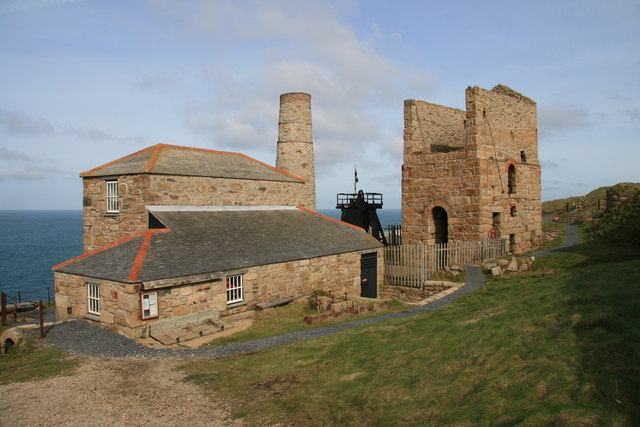
- Engine houses, mine shafts, spoil heaps, ports, foundries and workers' settlements document two centuries of metalliferous mining.
- In the early 19th century the region produced two-thirds of the world's copper, and its steam technology spread worldwide.
- Mining declined from the 1860s, and metalliferous mining finally ceased in Cornwall in 1998 with the closure of South Crofty Mine.
History
The Cornwall and West Devon Mining Landscape is a World Heritage Site in south west England, a cultural landscape also known as the Cornish Mining World Heritage Site. It was inscribed on the World Heritage List in July 2006. The property comprises components dating principally from 1700 to 1914, the period during which the most significant industrial and social impacts occurred. The site comprises discrete but thematically linked areas spanning Cornwall and West Devon, with component parts including St Just Mining District, Hayle Harbour, Wendron Mining District, Camborne and Redruth Mining District with Wheal Peevor and Portreath Harbour, St Agnes Mining District, Caradon Mining District, and Tamar Valley Mining District with Tavistock.
Up to the mid-16th century Devon produced approximately 25 to 40 per cent of the amount of tin that Cornwall did, although total tin production from both counties was relatively small. After the 1540s Cornwall's production took off and Devon's production was only about a ninth to a tenth of Cornwall's. From the mid-16th century onwards, the Devon stannaries were worth very little income to the King and were sidelined following the Supremacy of Parliament Act 1512, although this did not apply to the Stannaries of Cornwall.
The main transformation came in the 18th and 19th centuries. Much of the landscape of Cornwall and West Devon was transformed in the 18th and early 19th centuries by the rapid growth of pioneering copper and tin mining, and the landscapes were radically reshaped by deep-lode mining for copper and tin. Underground mines, engine houses, foundries, new towns, smallholdings, ports, harbours and ancillary industries together reflect innovation which in the early 19th century enabled the region to produce two-thirds of the world's supply of copper. The early 19th century saw a revolution in steam engine technology, with high-pressure expansively operated pumping engines developed by Richard Trevithick and Arthur Woolf enabling mining at much greater depths; Cornish-design beam engines and other mining machinery were exported from major engineering foundries in Hayle, Perranarworthal, Tavistock and elsewhere to mining fields around the world throughout the century, and Cornish technology embodied in engines, engine houses and mining equipment was exported around the world, with Cornwall and West Devon as the heartland from which mining technology rapidly spread.
During the late 19th century arsenic production came into ascendancy, with mines in the east of Cornwall and West Devon supplying half the world's demand. A much reduced mining industry continued in Cornwall after the copper crash of the 1860s, with production mainly focused on tin. Mining in the region gradually declined in the 1860s, and large numbers of miners migrated to mining areas with Cornish traditions in South Africa, Australia, and Central and South America, where Cornish-style engine houses remain. Significant numbers of mine workers migrated from the early 19th century, reaching a zenith at the end of the 19th century, and today numerous migrant-descended Cornish communities flourish around the world, with distinctive Cornish-design engine houses visible in Australia, New Zealand, South Africa, Mexico, the British Virgin Islands, Spain and other mining fields.
Metalliferous mining finally ceased in Cornwall in 1998 with the closure of South Crofty Mine at Pool, the last tin mine to operate in Europe; South Crofty has substantial tin reserves and in January 2025 the British government announced a £28.6 million investment to support its reopening. The landscape encompasses engine houses, mine shafts, spoil heaps and workers' settlements, and these structures and archaeological remains document the technical evolution of mining practice and the social organisation of extraction industries across two centuries; the site comprises multiple locations across a wide geographical area and is a landscape heritage site rather than a single monument. Following plans in 2011 to restart mining at South Crofty and to build a supermarket at Hayle Harbour, the World Heritage Committee drafted a decision in 2014 to put the site on the List of World Heritage in Danger, but this was rejected at the 38th Committee Session in Doha, Qatar, in July 2014 in favour of a follow-up reactive monitoring mission.
Richard Trevithick, born at Tregajorran between Camborne and Redruth, was the son of a mine captain and became an early pioneer of steam-powered road and rail transport; his most significant contributions were the development of the first high-pressure steam engine and the first working railway steam locomotive, and the world's first locomotive-hauled railway journey took place on 21 February 1804 along the tramway of the Penydarren Ironworks in Merthyr Tydfil, Wales. Trevithick became engineer at the Ding Dong Mine in 1797 and there, in conjunction with Edward Bull, pioneered the use of high-pressure steam, working on building and modifying steam engines to avoid royalties due to Watt on the separate condenser patent; Boulton & Watt served an injunction on him at Ding Dong. In 1797 he married Jane Harvey of Hayle, whose father John Harvey had formed the local foundry, Harveys of Hayle, a company that became famous worldwide for building huge stationary beam engines for pumping water, usually from mines. Arthur Woolf, born in Camborne in 1766, left Cornwall in 1785 to work for Joseph Bramah's engineering works in London, where he worked and at other firms as an engineer and engine builder until 1811, experimenting with high pressure steam and a much improved boiler before returning to Cornwall.
He obtained a patent in 1803 on an improved boiler for producing high pressure steam and in 1804 patented his best-known invention, a compound steam engine, a parallel compound engine with two cylinders in which the steam worked in succession, both coupled to the same end of the beam. Woolf was chief engineer to Harvey & Co of Hayle, the leading engineering and foundry works and at this time the largest in the world, which eventually swallowed up the rival Copperhouse Foundry run by Sandys, Carne and Vivian; for very many years they were the leading firm worldwide for drainage engines, even supplying three eight-beamed pumping engines to the Dutch government to drain the Haarlemmermeer. By the time Woolf retired in 1836 the Cornish engine, owing largely to his efforts, was a thing of magnificent beauty and efficiency, and Michael Loam, who introduced the man engine to the UK, was trained by him.
Botallack was a submarine mine with tunnels extending under the sea, in places for half a mile, and over its recorded lifetime produced around 14,500 tonnes of tin, 20,000 tonnes of copper and 1,500 tonnes of arsenic, with an estimated 1.5 million tonnes of waste dug up with the minerals. Nicholas Boynes was captain of the mine in the early 18th century and opened a deep adit level driven to the Corpus Christi lode in the higher mine, and the first steam engine was put to work at Carnyorth Moor, later part of the Botallack sett, in either 1795 or about 1810, depending on the source. In the first half of the 19th century the average price of Botallack tin was £64 4s a ton, and the abolition of the tin duty of 4s per 120 lbs to the Duke of Cornwall in 1838 helped keep the mine operating despite a decline in the price of tin to £45 per ton. In the 1860s a new diagonal shaft was dug at Botallack, and a visit by the Prince and Princess of Wales in 1865, when they descended the shaft, created a mini-boom in tourism, causing the mine operators to charge visitors a guinea per person.
An increasing supply of tin, initially from Malaysia, Banka Island and Sumatra and from the 1870s onwards from Australia, along with a fall in demand for tinplate in the American market, caused the price of tin to fall and many Cornish mines to close. The managers decided in January 1883 to stop the Botallack and Crowns engines because the number of men employed below ground was not sufficient to meet the costs of keeping the engines going, and on 2 October 1883 the recently renewed setts, extending over 2 miles and comprising Wheal Cock, the Crowns, Carnyorth and Higher Mine, were put up for auction as a going concern with four pumping and three winding engines, two steam stamps and other appliances; at the auction it was stated that the mine only needed from £20,000 to £25,000 to be put in good working order, and there were no bids.
It is unclear how far back mining activity goes in this location; early records date from the 1500s, and some archaeological evidence points to mining here in the Roman era or even as far back as the Bronze Age. Trevithick was the youngest-but-one child and the only boy in a family of six children, and he was very tall for the era at 6 ft 2 in, as well as athletic and concentrated more on sport than schoolwork. Sent to the village school at Camborne, he did not take much advantage of the education provided; one of his school masters described him as "a disobedient, slow, obstinate, spoiled boy, frequently absent and very inattentive", though arithmetic was an exception for which he had an aptitude, arriving at the correct answers by unconventional means. Trevithick was the son of mine captain Richard Trevithick and of miner's daughter Ann Teague, and as a child he would watch steam engines pump water from the deep tin and copper mines in Cornwall.
For a time he was a neighbour of William Murdoch, the steam carriage pioneer, and would have been influenced by Murdoch's experiments with steam-powered road locomotion. Trevithick first went to work at the age of 19 at the East Stray Park Mine, was enthusiastic and quickly gained the status of a consultant, unusual for such a young person, and was popular with the miners because of the respect they had for his father. He was extremely strong and was a champion Cornish wrestler. In 1797 Trevithick married Jane Harvey of Hayle, and they raised six children: Richard, Anne Ellis, Elizabeth Banfield, John Harvey, Francis and Frederick Henry.
When he returned to Cornwall, beam engine designs were crude, shackled by outdated Watt patents and poor engineering, struggling to compete with large water wheels, even used underground. He learned from Bramah that to move forward meant adopting much improved engineering techniques, for it was Bramah who invented quality control. The operation of the engine can be described as being a high-pressure cylinder of Trevithick's high-pressure simple expansion engine, followed by a condensing cylinder of Watt's design. Woolf had worked as an engine erector for Hornblower and was familiar with his earlier work on compound engines, and as a Cornishman he was also familiar with Trevithick and his newly developed high-pressure "puffer" engines that were then entering service.
He recognised that, even with the new principle of expansion, the exhaust from a Trevithick engine was still of a pressure comparable to the inlet pressure of a Watt engine, and from this step it was a relatively simple matter to couple the two. For most uses, the cylinders of the engine were double-acting, and opposing sides of the high- and low-pressure cylinders were cross-connected to each other; where engines were used for pumping, Woolf engines were also built with paired single-acting cylinders. Examples of Woolf compound rotative beam engines may be seen at Abbey Pumping Station, Blagdon Lake, Claymills Pumping Station, The Hamilton Museum of Steam & Technology, and the Western Springs Pumphouse, now part of the Museum of Transport and Technology Auckland, New Zealand.
James Sowerby was born in Lambeth, London, on 21 March 1757 and died on 25 October 1822; his parents were named John and Arabella. Having decided to become a painter of flowers, his first venture was with William Curtis, whose Flora Londinensis he illustrated. Sowerby studied art at the Royal Academy and took an apprenticeship with Richard Wright. He married Anne Brettingham De Carle and they were to have four daughters and three sons: James De Carle Sowerby, George Brettingham Sowerby I and Charles Edward Sowerby, the Sowerby family of naturalists.
His sons and theirs were to contribute and continue the enormous volumes he was to begin, and the Sowerby name was to remain associated with illustration of natural history. An early commission for Sowerby was to lead to his prominence in the field when the botanist L'Hértier de Brutelle invited Sowerby to provide the plates for his monograph, Geranologia, and two later works. He also came to the notice of William Curtis, who was undertaking a new type of publication, and early volumes of the first British botany journal, The Botanical Magazine, contained fifty-six of his illustrations. In 1790 he began the first of several huge projects: a 36-volume work, English Botany, that was published over the next 23 years, contained 2,592 hand-coloured engravings and became known as Sowerby's Botany.
An enormous number of plants were to receive their first formal publication within this work, but the authority for these came from the initially unattributed text written by James Edward Smith. The work was continued by his son, James de Carle Sowerby, who published a further set of 204 plates, mostly uncoloured until the end of the first edition in 1835, and further plates were added by other hands up to 1865 ending with plate number 2,999. It was the inclusion of science in the form of natural history, such as the thousands of botanicals supplied by Smith or his own research, that distinguished Sowerby's art from early forms of still life. This careful description of the subjects, drawing from specimens and research, was in contrast to the flower painting of the Rococo period found illuminating the books and galleries of a select audience.
Sowerby intended to reach an audience whose curiosity for gardening and the natural world could be piqued by publishing the attractive and more affordable works, and the appealing hand-coloured engravings also became highly valued by researchers into the new fields of science. His next project was of similar scale: the Mineral Conchology of Great Britain, a comprehensive catalogue of many invertebrate fossils found in England, was published over a 34-year time-span, the latter parts by his sons James De Carle Sowerby and George Brettingham Sowerby I, and the finished work contains 650 coloured plates distributed over 7 volumes. He also developed a theory of colour and published two landmark illustrated works on mineralogy: the British Mineralogy and as a supplement to it the Exotic Mineralogy. Sowerby retained the specimens used in the expansive volumes he helped to produce, and many notable geologists and other scientists of the day were to lend or donate specimens to his collection.
Images




Detailed History
The Cornwall and West Devon Mining Landscape is a World Heritage Site in south west England, a cultural landscape also known as the Cornish Mining World Heritage Site. It was inscribed on the World Heritage List at the 30th Session of the UNESCO World Heritage Committee in Vilnius in July 2006. The property comprises components dating principally from 1700 to 1914, the period during which the most significant industrial and social impacts occurred. The site comprises discrete but thematically linked areas spanning Cornwall and West Devon, with component parts including St Just Mining District, Hayle Harbour, Wendron Mining District, Camborne and Redruth Mining District with Wheal Peevor and Portreath Harbour, St Agnes Mining District, Caradon Mining District, and Tamar Valley Mining District with Tavistock.
Up to the mid-16th century Devon produced approximately 25 to 40 per cent of the amount of tin that Cornwall did, although total tin production from both counties was relatively small. After the 1540s Cornwall’s production took off and Devon’s production was only about a ninth to a tenth of Cornwall’s. From the mid-16th century onwards, the Devon stannaries were worth very little income to the King and were sidelined following the Supremacy of Parliament Act 1512, although this did not apply to the Stannaries of Cornwall.
The main transformation came in the 18th and 19th centuries. Much of the landscape of Cornwall and West Devon was transformed in the 18th and early 19th centuries by the rapid growth of pioneering copper and tin mining, and the landscapes were radically reshaped by deep-lode mining for copper and tin. Underground mines, engine houses, foundries, new towns, smallholdings, ports, harbours and ancillary industries together reflect innovation which in the early 19th century enabled the region to produce two-thirds of the world’s supply of copper. The early 19th century saw a revolution in steam engine technology, with high-pressure expansively operated pumping engines developed by Richard Trevithick and Arthur Woolf enabling mining at much greater depths; Cornish-design beam engines and other mining machinery were exported from major engineering foundries in Hayle, Perranarworthal, Tavistock and elsewhere to mining fields around the world throughout the century, and Cornish technology embodied in engines, engine houses and mining equipment was exported around the world, with Cornwall and West Devon as the heartland from which mining technology rapidly spread.
During the late 19th century arsenic production came into ascendancy, with mines in the east of Cornwall and West Devon supplying half the world’s demand. A much reduced mining industry continued in Cornwall after the copper crash of the 1860s, with production mainly focused on tin. Mining in the region gradually declined in the 1860s, and large numbers of miners migrated to mining areas with Cornish traditions in South Africa, Australia, and Central and South America, where Cornish-style engine houses remain. Significant numbers of mine workers migrated from the early 19th century, reaching a zenith at the end of the 19th century, and today numerous migrant-descended Cornish communities flourish around the world, with distinctive Cornish-design engine houses visible in Australia, New Zealand, South Africa, Mexico, the British Virgin Islands, Spain and other mining fields.
Metalliferous mining finally ceased in Cornwall in 1998 with the closure of South Crofty Mine at Pool, the last tin mine to operate in Europe; South Crofty has substantial tin reserves and in January 2025 the British government announced a £28.6 million investment to support its reopening. The landscape encompasses engine houses, mine shafts, spoil heaps and workers’ settlements, and these structures and archaeological remains document the technical evolution of mining practice and the social organisation of extraction industries across two centuries; the site comprises multiple locations across a wide geographical area and is a landscape heritage site rather than a single monument. Following plans in 2011 to restart mining at South Crofty and to build a supermarket at Hayle Harbour, the World Heritage Committee drafted a decision in 2014 to put the site on the List of World Heritage in Danger, but this was rejected at the 38th Committee Session in Doha, Qatar, in July 2014 in favour of a follow-up reactive monitoring mission.
The political context of the site’s creation lies in the United Kingdom’s responsibilities for the defence and international relations of its Crown Dependencies, although the Channel Islands are not part of the United Kingdom and are neither members of the Commonwealth of Nations nor part of the European Union. The two bailiwicks of Jersey and Guernsey have been administered separately since the late 13th century, each with its own independent laws, elections and representative bodies, and Guernsey is further divided into the jurisdictions of Guernsey, Alderney and Sark, each with its own legislature. The term “Channel Islands” is geographical rather than political and began to be used around 1830, possibly first by the Royal Navy as a collective name for the islands. The islands are historically the remnants of the Duchy of Normandy, and the Chausey Islands south of Jersey, though historically linked to the Duchy, are part of French territory and not part of the British Isles or of the Channel Islands in a political sense.
Richard Trevithick, born at Tregajorran between Camborne and Redruth, was the son of a mine captain and became an early pioneer of steam-powered road and rail transport; his most significant contributions were the development of the first high-pressure steam engine and the first working railway steam locomotive, and the world’s first locomotive-hauled railway journey took place on 21 February 1804 along the tramway of the Penydarren Ironworks in Merthyr Tydfil, Wales. Trevithick became engineer at the Ding Dong Mine in 1797 and there, in conjunction with Edward Bull, pioneered the use of high-pressure steam, working on building and modifying steam engines to avoid royalties due to Watt on the separate condenser patent; Boulton & Watt served an injunction on him at Ding Dong. In 1797 he married Jane Harvey of Hayle, whose father John Harvey had formed the local foundry, Harveys of Hayle, a company that became famous worldwide for building huge stationary beam engines for pumping water, usually from mines. Arthur Woolf, born in Camborne in 1766, left Cornwall in 1785 to work for Joseph Bramah’s engineering works in London, where he worked and at other firms as an engineer and engine builder until 1811, experimenting with high pressure steam and a much improved boiler before returning to Cornwall.
He obtained a patent in 1803 on an improved boiler for producing high pressure steam and in 1804 patented his best-known invention, a compound steam engine, a parallel compound engine with two cylinders in which the steam worked in succession, both coupled to the same end of the beam. Woolf was chief engineer to Harvey & Co of Hayle, the leading engineering and foundry works and at this time the largest in the world, which eventually swallowed up the rival Copperhouse Foundry run by Sandys, Carne and Vivian; for very many years they were the leading firm worldwide for drainage engines, even supplying three eight-beamed pumping engines to the Dutch government to drain the Haarlemmermeer. By the time Woolf retired in 1836 the Cornish engine, owing largely to his efforts, was a thing of magnificent beauty and efficiency, and Michael Loam, who introduced the man engine to the UK, was trained by him. Botallack was a submarine mine with tunnels extending under the sea, in places for half a mile, and over its recorded lifetime produced around 14,500 tonnes of tin, 20,000 tonnes of copper and 1,500 tonnes of arsenic, with an estimated 1.5 million tonnes of waste dug up with the minerals.
Nicholas Boynes was captain of the mine in the early 18th century and opened a deep adit level driven to the Corpus Christi lode in the higher mine, and the first steam engine was put to work at Carnyorth Moor, later part of the Botallack sett, in either 1795 or about 1810, depending on the source. In the first half of the 19th century the average price of Botallack tin was £64 4s a ton, and the abolition of the tin duty of 4s per 120 lbs to the Duke of Cornwall in 1838 helped keep the mine operating despite a decline in the price of tin to £45 per ton. In the 1860s a new diagonal shaft was dug at Botallack, and a visit by the Prince and Princess of Wales in 1865, when they descended the shaft, created a mini-boom in tourism, causing the mine operators to charge visitors a guinea per person. An increasing supply of tin, initially from Malaysia, Banka Island and Sumatra and from the 1870s onwards from Australia, along with a fall in demand for tinplate in the American market, caused the price of tin to fall and many Cornish mines to close.
The managers decided in January 1883 to stop the Botallack and Crowns engines because the number of men employed below ground was not sufficient to meet the costs of keeping the engines going, and on 2 October 1883 the recently renewed setts, extending over 2 miles and comprising Wheal Cock, the Crowns, Carnyorth and Higher Mine, were put up for auction as a going concern with four pumping and three winding engines, two steam stamps and other appliances; at the auction it was stated that the mine only needed from £20,000 to £25,000 to be put in good working order, and there were no bids.
It is unclear how far back mining activity goes in this location; early records date from the 1500s, and some archaeological evidence points to mining here in the Roman era or even as far back as the Bronze Age. He was the youngest-but-one child and the only boy in a family of six children, and he was very tall for the era at 6 ft 2 in, as well as athletic and concentrated more on sport than schoolwork. Sent to the village school at Camborne, he did not take much advantage of the education provided; one of his school masters described him as “a disobedient, slow, obstinate, spoiled boy, frequently absent and very inattentive”, though arithmetic was an exception for which he had an aptitude, arriving at the correct answers by unconventional means. Trevithick was the son of mine captain Richard Trevithick and of miner’s daughter Ann Teague, and as a child he would watch steam engines pump water from the deep tin and copper mines in Cornwall.
For a time he was a neighbour of William Murdoch, the steam carriage pioneer, and would have been influenced by Murdoch’s experiments with steam-powered road locomotion. Trevithick first went to work at the age of 19 at the East Stray Park Mine, was enthusiastic and quickly gained the status of a consultant, unusual for such a young person, and was popular with the miners because of the respect they had for his father. He was extremely strong and was a champion Cornish wrestler. In 1797 Trevithick married Jane Harvey of Hayle, and they raised six children: Richard, Anne Ellis, Elizabeth Banfield, John Harvey, Francis and Frederick Henry.
When he returned to Cornwall, beam engine designs were crude, shackled by outdated Watt patents and poor engineering, struggling to compete with large water wheels, even used underground. He learned from Bramah that to move forward meant adopting much improved engineering techniques, for it was Bramah who invented quality control. The operation of the engine can be described as being a high-pressure cylinder of Trevithick’s high-pressure simple expansion engine, followed by a condensing cylinder of Watt’s design. Woolf had worked as an engine erector for Hornblower and was familiar with his earlier work on compound engines, and as a Cornishman he was also familiar with Trevithick and his newly developed high-pressure “puffer” engines that were then entering service.
He recognised that, even with the new principle of expansion, the exhaust from a Trevithick engine was still of a pressure comparable to the inlet pressure of a Watt engine, and from this step it was a relatively simple matter to couple the two. For most uses, the cylinders of the engine were double-acting, and opposing sides of the high- and low-pressure cylinders were cross-connected to each other; where engines were used for pumping, Woolf engines were also built with paired single-acting cylinders. Examples of Woolf compound rotative beam engines may be seen at Abbey Pumping Station, Blagdon Lake, Claymills Pumping Station, The Hamilton Museum of Steam & Technology, and the Western Springs Pumphouse, now part of the Museum of Transport and Technology Auckland, New Zealand. James Sowerby was born in Lambeth, London, on 21 March 1757 and died on 25 October 1822; his parents were named John and Arabella.
Having decided to become a painter of flowers, his first venture was with William Curtis, whose Flora Londinensis he illustrated. Sowerby studied art at the Royal Academy and took an apprenticeship with Richard Wright. He married Anne Brettingham De Carle and they were to have four daughters and three sons: James De Carle Sowerby, George Brettingham Sowerby I and Charles Edward Sowerby, the Sowerby family of naturalists. His sons and theirs were to contribute and continue the enormous volumes he was to begin, and the Sowerby name was to remain associated with illustration of natural history.
An early commission for Sowerby was to lead to his prominence in the field when the botanist L’Hértier de Brutelle invited Sowerby to provide the plates for his monograph, Geranologia, and two later works. He also came to the notice of William Curtis, who was undertaking a new type of publication, and early volumes of the first British botany journal, The Botanical Magazine, contained fifty-six of his illustrations. In 1790 he began the first of several huge projects: a 36-volume work, English Botany, that was published over the next 23 years, contained 2,592 hand-coloured engravings and became known as Sowerby’s Botany. An enormous number of plants were to receive their first formal publication within this work, but the authority for these came from the initially unattributed text written by James Edward Smith.
The work was continued by his son, James de Carle Sowerby, who published a further set of 204 plates, mostly uncoloured until the end of the first edition in 1835, and further plates were added by other hands up to 1865 ending with plate number 2,999. It was the inclusion of science in the form of natural history, such as the thousands of botanicals supplied by Smith or his own research, that distinguished Sowerby’s art from early forms of still life. This careful description of the subjects, drawing from specimens and research, was in contrast to the flower painting of the Rococo period found illuminating the books and galleries of a select audience. Sowerby intended to reach an audience whose curiosity for gardening and the natural world could be piqued by publishing the attractive and more affordable works, and the appealing hand-coloured engravings also became highly valued by researchers into the new fields of science.
His next project was of similar scale: the Mineral Conchology of Great Britain, a comprehensive catalogue of many invertebrate fossils found in England, was published over a 34-year time-span, the latter parts by his sons James De Carle Sowerby and George Brettingham Sowerby I, and the finished work contains 650 coloured plates distributed over 7 volumes. He also developed a theory of colour and published two landmark illustrated works on mineralogy: the British Mineralogy and as a supplement to it the Exotic Mineralogy. Sowerby retained the specimens used in the expansive volumes he helped to produce, and many notable geologists and other scientists of the day were to lend or donate specimens to his collection.
Sources
- Cornwall and West Devon Mining Landscape — Wikipedia
- Wikidata — Wikidata
- Cornwall and West Devon Mining Landscape — UNESCO World Heritage Centre
- Cornwall and West Devon Mining Landscape — whc.unesco.org
- Cornwall and West Devon Mining Landscape — whc.unesco.org
- Cornwall and West Devon Mining Landscape — culturalheritageonline.com
- Levant-Mine-by-John-Gibson.jpg — Wikimedia Commons
- De Lank Quarries, Hantergantick - geograph.org.uk - 278119.jpg — Wikimedia Commons
- Cornish miners - 1866.png — Wikimedia Commons
- Cornish Tin Mine - geograph.org.uk - 6567.jpg — Wikimedia Commons
- Copper mining spoil heaps. South Caradon Mine, 1978 - geograph.org.uk - 64594.jpg — Wikimedia Commons
- Disused copper mining buildings, South Caradon mines 1979 - geograph.org.uk - 66018.jpg — Wikimedia Commons
- East Calstock Mine buildings 1977 - geograph.org.uk - 62416.jpg — Wikimedia Commons
- Chimney in the fields near Leswidden - geograph.org.uk - 88496.jpg — Wikimedia Commons
- Baronet's Engine House, Pennance Consols - geograph.org.uk - 145190.jpg — Wikimedia Commons
- China Clay Landscape - geograph.org.uk - 226409.jpg — Wikimedia Commons