
Settlement · Fortification
Cardigan Castle
Grade I listed castle in Cardigan, United Kingdom

Cardigan, United Kingdom · United Kingdom
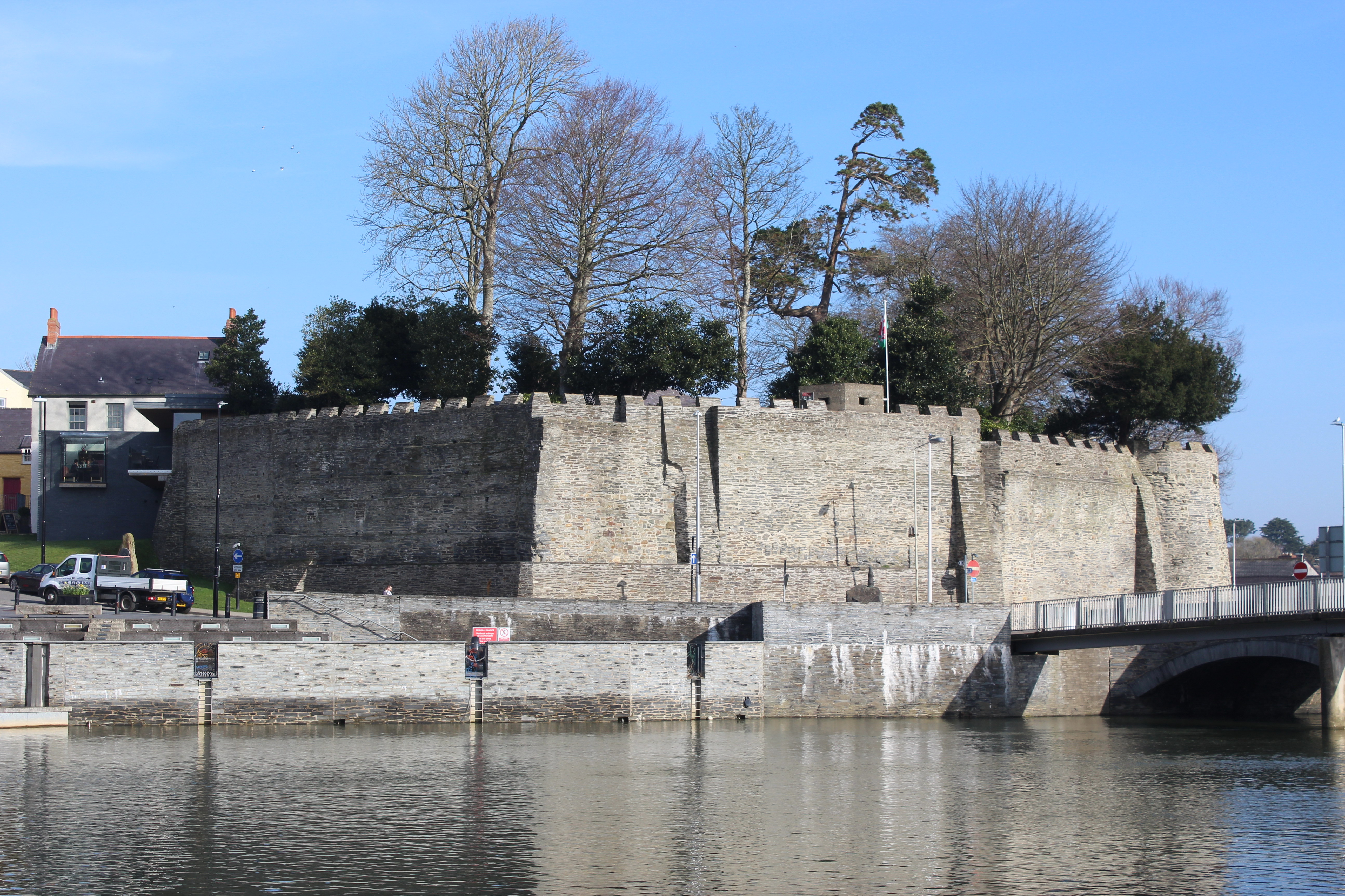
- Cardigan Castle, Castell Aberteifi, stands on a rocky spur above the River Teifi, and the circuit that remains is largely a thirteenth-century rebuild inside an enclosure of about 90 by 44 metres.
- A wooden castle is placed on this ground in 1110, after an earlier motte about a mile downstream, and the first stone work is credited to the Lord Rhys in 1171.
- The Christmas gathering of 1176, a contest in poetry and in music, is counted as the first eisteddfod, and in 2026 the castle marks 850 years since that gathering and since the stone castle was completed.
- The castle passed between the Lord Rhys, Llywelyn ab Iorwerth and the Norman lords, was slighted in the English Civil War, and later held a Regency house and garden in the ward.
- Ceredigion County Council bought it on 14 April 2003, and it opened to the public on 15 April 2015 after a restoration given as about £11 million and as about £12 million.
Visiting
Adult admission is £9 for a ticket valid for seven days from purchase, and one display of the adult ticket gave the price as £8. An annual adult ticket is £18. A family ticket for two adults and up to three children is £25 for a week from purchase, or £50 for a year. A child ticket covers ages 3 to 16, children under 3 are free, and the annual child ticket is £10.
Tickets bought in advance allow unlimited visits for seven days from purchase, or for twelve months on an annual ticket. Groups of 25 or more are asked to arrange admission with the castle before they come. The castle is open every Wednesday, Thursday, Friday and Saturday from 11:00 to 16:00. The castle is also given as open every day from 10:00 to 16:00.
From 1 November to 19 December the castle is closed on Monday, Tuesday and Sunday, and open from 11:00 to 16:00 on Wednesday, Thursday, Friday and Saturday. One account gives the reopened castle as open daily between April and October. The restaurant is open daily from 8:30, is described as open seven days a week, and is open during the day. Dogs on leads are allowed to enter at £2 a dog, with a maximum of two dogs a visitor, and no other animals are allowed to enter.
Dogs are not allowed in Castle Green House and are not usually allowed at events outside normal opening. Wheelchair users are allowed to enter along the paths, wheelchairs are available, and a lift gives entry to Castle Green House. Accommodation entry is available all year, depending on availability.
History
Cardigan Castle, Castell Aberteifi, occupies a rocky spur at the southern end of Cardigan, above the River Teifi and the bridge. The enclosure runs about 90 metres from north-east to south-west and about 44 metres across, with crags at the river end and steep ground on the south-east. Three semi-circular towers remain, the largest inside Castle Green House, together with a north-eastern bastion and a possible second bastion at the south angle.
A pill-box of about 1940 stands on the embankment above the bridge. An earlier motte is placed about 1093, a mile downstream, and may be the castle of Earl Roger de Montgomery at the estuary. The present site is said to have been occupied since 1110, when Henry I took Cardigan from Owain ap Cadwgan and gave the lordship, castle included, to Gilbert Fitz Richard.
That grant is also placed about 1107 to 1111. Gilbert, dead in or before 1117, had held Clare and Tonbridge, and in 1136 the castle passed to his son Gilbert de Clare, first Earl of Pembroke. The Battle of Crug Mawr was fought in September or October 1136 near Penparc, probably on Banc y Warren, though a 2014 survey at Crugmore Farm found no trace of fighting in the ground it examined.
Owain Gwynedd and Cadwaladr, with Gruffydd ap Rhys, routed a Norman force under Robert fitz Martin. The town was burned, the bridge is said to have broken, and hundreds are said to have drowned, while another account speaks of 10,000 widows and a crossing made dry-footed over the choked river. Robert fitz Martin held the castle.
A different account puts the battle in 1165 and says the Lord Rhys won the castle then. The Lord Rhys took the castle in early November 1165 with scaling ladders and demolished it, or in 1166 by another dating. In 1171 he moved his court here and began the first stone castle credited to a Welsh prince.
At Christmas 1176, a gathering also placed in 1176 to 1177, he held a bardic tournament proclaimed a year ahead, with chairs for poetry and for music. A poet from Gwynedd and the son of Eilon the Crythwr were the winners. The castle marks 850 years from that completion and that gathering in 2026.
After Rhys died in 1197, Maelgwn sold the castle to King John. Llywelyn ab Iorwerth took it in 1215, the parliament at Aberdyfi assigned it in 1216, and William Marshall the Younger recovered it in 1223. Rhys Gryg burned the town and seized the castle for Llywelyn in 1231.
Llywelyn held it until 1240. The standing masonry is mostly a rebuild of about 1244 to 1254 under Robert Waleran, constable from 1248, though a rebuilding is also dated 1240 and Earl Gilbert of Pembroke is also credited with work and town walls in 1244. Prince Edward received the castle on 14 February 1254.
Cardigan is called the county town from 1279, and the county is also dated 1284. A tower was finished in haste in 1321, and by 1343 parts of the curtain were ruined. After Glyndŵr’s revolt a new hall and tower were built, and major repairs are placed in 1428 and 1429 under Prince Henry.
In the English Civil War, Parliamentarians under General Laugharne took the castle in 1644. In 1645 a Royalist siege left the bridge partly down, the Royalists were beaten, and the castle was slighted and burned, and ordered demolished. One account names Oliver Cromwell as the attacker in 1645.
It then served as a prison into the eighteenth century, or stood empty until the nineteenth. A terrace of 1713 was used at times as a bowling green. Castle Green House is first mentioned in 1799, leased by John Bowen to Thomas Colby, and the house itself is dated between 1805 and 1808, on the keep, using a thirteenth-century round tower.
Arthur Jones added the front range in 1827, with David Evans of Eglwyswrw as architect, and David Davies of Carnarchenwen bought it in 1836. The Regency garden, made in phases from 1713 to the years 1924 to 1939, was designated Grade II on 1 February 2022. The castle itself is Grade I, designated on 16 June 1961.
A shipping magnate bought the estate in 1940, and his daughter Barbara Wood lived on while the fabric failed. The house was unfit in 1984, when she was in a caravan and 30 feet of the west wall fell. She left in 1996, and also in 1999.
Ceredigion County Council bought the castle from her on 14 April 2003. Excavation has found medieval deposits under as much as 2 metres of soil, a fruitless trial in 1984, a twelfth-century square structure in the croquet lawn, and in 2014 more than 9,500 objects, among them a three-square-metre pitch-stone structure of the 1171 castle, a dolphin skull, and a medieval arrowhead. The restoration cost about £11 million and about £12 million. The castle opened to the public on 15 April 2015.
Images




Detailed History
Cardigan Castle, Castell Aberteifi in Welsh, stands on a rocky spur at the southern end of Cardigan, above the River Teifi and the bridge. The ground is a promontory. What remains is an irregular enclosure of about 90 metres from north-east to south-west and about 44 metres across, with the south-western end clothing natural crags above the river and steep slopes on the south-east. Portions of curtain wall survive.
Three semi-circular towers remain, the largest and most elaborate built into Castle Green House, and there is one rectilinear bastion at the north-east, with a possible second at the south angle. A tall embankment overlooking the bridge carries a pill-box of about 1940, from the Second World War. The castle is listed Grade I, designated on 16 June 1961, and it is a scheduled ancient monument. One account says the medieval remains were to be scheduled on 15 January 1954 and officially became a scheduled ancient monument on 16 June 1961, the same day Castle Green House was named a listed building.
The Great Tower is listed with the house. On the Ordnance Survey National Grid the castle is given as SN17704594 and as SN1778545909, and as easting 217792 with northing 245907. The registered garden is given as easting 217802 with northing 245936. In that grid a six-figure reference marks a square of 100 metres, and an all-numeric reference is an easting then a northing in metres, measured from an origin to the west of the Isles of Scilly.
The first motte and bailey is placed about 1093, a mile from the present site, and references to a castle of Earl Roger de Montgomery at the Teifi estuary may mean that older ground, called Old Castle, a mile downstream. The present castle is said to have been occupied continuously since 1110, when a wooden castle was built here. King Henry I took Cardigan in 1110 from Owain ap Cadwgan, son of Cadwgan ap Bleddyn, as punishment for crimes that included the abduction of Nest, wife of Gerald de Windsor. Henry gave the lordship of Cardigan, including the castle, to Gilbert Fitz Richard.
The grant is also placed about 1107 to 1111. Gilbert, called Lord of Clare, is credited with the forerunner of the present castle after the earlier one had been destroyed.
Gilbert Fitz Richard, born before 1066 and dead in or before 1117, was the second son of Richard Fitz Gilbert of Clare and Rohese Giffard, the second feudal baron of Clare in Suffolk, and styled de Tonbridge. He took his father’s English possessions in 1088, when his father retired to a monastery, while his brother Roger Fitz Richard inherited the Norman lands. That year the brothers fortified Tonbridge against William Rufus. The castle was stormed, and Gilbert was wounded and taken prisoner.
He was in attendance at the death of William Rufus in August 1100, and he was with Henry I at the Christmas court at Westminster in 1101. Modern historians have hinted that he had a part in the suspicious death of William II. Frank Barlow points out that no proof has been found of any such part, or that a conspiracy even existed. About 1088 Gilbert married Adeliza, also called Alice de Clermont, daughter of Hugh, Count of Clermont, and Margaret de Ramerupt.
They had at least eight children. Richard Fitz Gilbert de Clare died in 1136. Gilbert Fitz Gilbert de Clare, who died in 1148, became the first Earl of Pembroke. The others were Baldwin Fitz Gilbert de Clare, who died in 1154 and married Adeline de Rollos; Adelize, or Alice, de Clare, who died in 1163, married about 1105 to Aubrey II de Vere, and later a corrodian at St Osyth’s in Essex; Hervey de Clare, lord of Montmorency; Walter de Clare, who died in 1149; Margaret de Clare, who died in 1185 and married about 1108 Sir William de Montfitchet; and Rohese de Clare, who died in 1149 and married about 1130 Baderon of Monmouth.
Gilbert founded a priory at Stoke-by-Clare in Suffolk.
The castle passed in 1136 to Gilbert’s son, Gilbert de Clare, first Earl of Pembroke. The same year the lord of Ceredigion, Richard Fitz Gilbert de Clare, was killed on his way back into Wales. He had been away early in the year. Returning in April, he ignored warnings and pressed on with a small force, and he was ambushed and killed by the men of Iorwerth ab Owain, grandson of Caradog ap Gruffydd.
A Welsh revolt had already opened on 1 January 1136 at the Battle of Llwchwr, between Loughor and Swansea, where about 500 Normans were killed. News of Richard’s death brought an invasion from Gwynedd.
The Battle of Crug Mawr, also called the Battle of Cardigan, was fought in September or October 1136, near Penparc, north-east of the town, probably on the hill now called Banc y Warren or Banc-y-Warren. The Royal Commission places it on the south-east slopes. A farm on that slope is named Crugmore. The hill lies 2 miles, or 3.2 kilometres, north-east of Cardigan, and it was known as Crug Mawr at least as early as the ninth century.
A geophysical survey and an archaeological appraisal at Crugmore Farm in 2014, made for planning applications, found no evidence of a battle in the areas they covered. Some accounts put the fighting on the north-east of the hill, where the road from Cardigan bends, rather than on the south-east, which does not meet a road. Around Michaelmas, 11 October in the Julian calendar then in use, Owain Gwynedd and his brother Cadwaladr ap Gruffydd invaded Ceredigion again, after an earlier raid that had taken castles in the north of the region, and they allied with Gruffydd ap Rhys of Deheubarth. The combined force made for the town.
The Normans were led by Robert fitz Martin, with Robert fitz Stephen, constable of Cardigan Castle, and the brothers William and Maurice FitzGerald, Maurice being lord of Lanstephan. A contemporary note in the Breviate Chronicle names, on the Welsh side, Owain and Cadwaladr, Gruffydd ap Rhys, Rhys ap Hywel, Madog ab Idnerth and the sons of Hywel, and on the Norman side Stephen the Constable and the sons of Gerald, supported by Flemish forces, some of whom had travelled a considerable distance. After hard fighting the Normans were put to flight and pursued to the Teifi. Many fugitives tried to cross the bridge, which broke under the weight.
Hundreds are said to have drowned, and the river was clogged with the bodies of men and horses. Foot soldiers were trampled by horses. Another account, quoted from the continuation of Florence of Worcester and probably written by his successor John of Worcester, who died about 1140, says the slaughter was so great that besides the male prisoners there were 10,000 widows whose husbands had been slain in the battle, burnt in the town, or drowned in the Teifi, and that the river was so choked that people passed over dry-footed. Florence himself had died in 1118.
The town was taken and burned. Robert fitz Martin still held the castle. Skulls with battle wounds have been found nearby. Gerald of Wales, writing in 1191, fifty-six years later, left Cruc Mawr near Aberteifi on his left as he went from Cilgerran toward Pont-Stephen, and he credited the victory to Gruffydd, son of Rhys ap Tewdwr, soon after the death of Henry I.
Members of Gerald’s family had been in the fight.
Some modern writers have speculated that longbows won the day. In 1188 Gerald noted that the bowmen of Gwent used long powerful bows, and he attributed the earlier death of Richard Fitz Gilbert de Clare to Welsh bowmen. No contemporary source on this battle mentions bows, or men from Gwent. It has been argued that the Normans, despite superior numbers and an elevated position, were surprised by the range of Welsh archers and did not adapt.
In 2018 Adam Price suggested that longbows were a feature of the battle and that the Norman threat led the Welsh to a new solution. The battle set Norman expansion in west Wales back for some years. Ceredigion, once part of Deheubarth, was annexed by Gwynedd, the stronger partner. Another account places the Battle of Crug Mawr in 1165 and says that Rhys ap Gruffydd led it, defeated the Normans, and won the castle from the son of de Clare.
Owain Gwynedd, Owain ap Gruffudd, died on 23 November 1170. He was king of Gwynedd from 1137 until that death, succeeding his father Gruffudd ap Cynan, and he is called Owain Gwynedd to distinguish him from Owain Cyfeiliog of Powys, who had the same patronymic. He is the first recorded Welsh ruler to style himself king of Wales and prince of the Welsh. He was of the house of Aberffraw, the senior branch of the dynasty of Rhodri Mawr.
His mother was Angharad ferch Owain, daughter of Owain ab Edwin of Tegeingl. He is thought to have been born on Anglesey about 1100, the second son. His elder brother Cadwallon was killed in 1132 fighting in Powys against Meirionnydd. By about 1120 Gruffudd was too old to lead in battle, and Owain, Cadwallon and later Cadwaladr led the forces of Gwynedd.
On his father’s death in 1137 Owain inherited part of a settled kingdom and had to share it with Cadwaladr. In 1143 Cadwaladr was implicated in the murder of Anarawd ap Gruffudd of Deheubarth, and Owain sent his son Hywel ab Owain Gwynedd to strip Cadwaladr of his lands in northern Ceredigion. From 1143 Owain ruled most of north Wales alone, though the brothers were later reconciled, and in 1155 Cadwaladr was driven into exile.
During the Anarchy, the civil war of Stephen, king of England, and the Empress Matilda, Owain pushed east. In 1146 he took Mold Castle. About 1150 he took Rhuddlan and pressed on the borders of Powys. Madog ap Maredudd of Powys, with help from Ranulf de Gernon, fourth Earl of Chester, fought him at Coleshill, and Owain won.
Henry II, king from 1154, invaded Gwynedd in 1157 with Madog and with Cadwaladr. The royal army was ambushed at Ewloe in a narrow wooded valley and routed, and Henry narrowly avoided capture. A fleet that landed on Anglesey was defeated. At the end of the campaign Owain had to come to terms and give up Rhuddlan and his other eastern conquests.
Madog died in 1160, and Owain regained ground in the east. In 1163 he allied with Rhys ap Gruffydd of Deheubarth against English rule. In 1165 Henry invaded again, not along the northern coast but from Oswestry over the Berwyn hills, and he met an alliance of the Welsh princes with Owain at their head. Apart from a small melee at the Battle of Crogen there was little fighting.
Torrential rain forced Henry to retreat in disorder, and he mutilated a number of Welsh hostages, including two of Owain’s sons. Owain wrote two letters to Louis VII of France, calling himself king of Wales and king of the Welsh. In the last of them he offered to become a vassal of the French king and to help attack Henry if France made war. He styled himself Waliarum Princeps, prince of Wales, the first known use of that title.
At that time princeps meant the chief ruler, not an heir to a throne, a later sense. Henry did not invade Gwynedd again. Owain recaptured Rhuddlan in 1167 after a siege of three months. His last years were spent in dispute with Thomas Becket, archbishop of Canterbury, over the bishopric of Bangor.
Owain had his nominee, Arthur of Bardsey, elected. The archbishop refused him, so Owain had Arthur consecrated in Ireland, and the dispute went on. In Deheubarth, Gruffydd ap Rhys died in uncertain circumstances in 1137, and the disruption let the Normans recover part of the south. Rhys ap Gruffydd won that ground back in the war of 1165 to 1170.
After 1136 the castle was retaken by the Normans and held for Earl Roger of Hertford. Rhys ap Gruffydd, the Lord Rhys, captured it in early November 1165, using scaling ladders, and demolished it. Another account places the capture in 1166. By 1155 he had brought Deheubarth, the west of Wales, under his control, after being forced to submit to Henry II on four occasions and rising again each time Henry withdrew.
Henry at last granted him the title lord of Ystrad Tywi, and he has been known as the Lord Rhys since. In 1171 he moved his chief court to Cardigan and began to rebuild the castle in stone. That work is called a rebuilding in stone in 1171, and it is regarded as the first stone castle built by the Welsh princes, and as the first stone castle built by a Welshman. The stronghold was his.
He repaired it again about 1204, and there were repairs in the 1220s.
In 1176 he held a gathering at the castle to celebrate the completion of the new work. There is no mention of an eisteddfod in the later sense before that year. The word itself did not come into common use until the fifteenth century, and it was coined in the fifteenth and sixteenth centuries. At the time the meeting was a bardic tournament.
It is placed over Christmas 1176, and over the Christmas period of 1176 to 1177, and it was proclaimed a year beforehand. Minstrels and bards were invited from all over Wales, and also from Ireland and France. There were two contests, one for poets and one for harpists and other musicians. Two bardic chairs were the prizes.
A bard from Gwynedd won the poetry chair. The son of Eilon the Crythwr, from Rhys’s own court, won the prize for music. The choice of Cardigan, rather than Dinefwr, the traditional seat of the rulers of Deheubarth, showed a stone castle and a borough lately taken from the Normans. Gatherings of this kind were already common in France, and this one is thought to owe more to Norman custom than to any earlier Welsh festival.
In 2026 the castle marks 850 years since the Lord Rhys completed the building and hosted that first gathering. Its own account also speaks of 900 years of continuous history. A later plaque calls the castle the birthplace of the National Eisteddfod. The yearly national festival, as an institution, was decided on at Denbigh in 1860 and first held at Aberdare in 1861, and it has run almost every year since 1880 except the war years of 1914 and 1940 and the years 2020 and 2021.
Similar contests continued in the fifteenth and sixteenth centuries and declined under Henry VIII, when favour was sought in London. London Welsh societies revived the custom at the end of the eighteenth century. The eisteddfod and the Gorsedd were first joined at Carmarthen in 1819, at a ceremony in the Ivy Bush Hotel associated with Iolo Morganwg. A stamp in 1975 marked an 800th anniversary of the first eisteddfod.
The restaurant in the castle is named 1176 for the gathering.
Rhys died in 1197. His sons Maelgwn and Gruffydd disputed the inheritance. Maelgwn surrendered Gruffydd to the Normans and sold the castle to King John. It was later held for William Marshall.
The quarrel had begun in the father’s old age. Rhys Gryg, whose name means Rhys the Hoarse, and who was also called Rhys Fychan, Rhys the Younger, was the fourth son of the Lord Rhys and of Gwenllian, daughter of Madog ap Maredudd of Powys. He married Mathilde, daughter of Richard de Clare, third Earl of Hertford and marcher lord of Cardigan. Her brother-in-law was Richard of Cornwall, king of the Romans.
Rhys Gryg first allied with Gruffudd ap Rhys against Maelgwn, then in 1195 joined another brother, Maredudd, in a conspiracy against their father. They captured Dinefwr Castle. Their father captured them and imprisoned them at Ystrad Meurig. Gruffudd died in 1201.
By 1204 Maelgwn held most of Deheubarth. That year Rhys Gryg allied with Gruffudd’s sons, Rhys and Owain, drove Maelgwn out of Ystrad Tywi, and received Cantref Mawr when the land was shared. By 1211 he had fallen out with those nephews, who supported Llywelyn ab Iorwerth, and he took Llandovery from them with English royal troops on behalf of King John. After John forced Llywelyn to give up conquests outside the core of Gwynedd, Rhys Gryg joined Maelgwn and pushed the nephews from the rest of their lands.
When John built a castle at Aberystwyth, the brothers changed sides, attacked it and burned it. In 1212 Rhys Gryg attacked and burned Swansea. In 1213 an English army under Falkes de Bréauté was sent to strip him of his lands for the nephews, who had made peace with John. He was defeated at Llandeilo, fled to Maelgwn in Ceredigion, and was later captured and imprisoned at Carmarthen.
Llywelyn the Great, Llywelyn ab Iorwerth, captured Cardigan Castle in 1215. In December of that year Rhys Gryg, released by the English in the hope that he would start a civil war among the Welsh, instead joined Llywelyn, Maelgwn and the sons of Gruffudd in an attack that took many castles in south Wales. At the parliament Llywelyn held at Aberdyfi in 1216, the castle was made over to the sons of Gruffydd ap Rhys of Deheubarth, and Rhys Gryg was allocated Cantref Mawr, Cantref Bychan and other lands. In 1223 William Marshall the Younger recaptured the castle.
In the war of 1231 Rhys Gryg and his nephew Maelgwn Fychan, son of Maelgwn, burned the town of Cardigan and then took the castle for Llywelyn. Llywelyn held it until his death in 1240. Another account says he captured and lost it several times before it returned to Norman hands after that death. In 1234 Rhys Gryg and Maelgwn Fychan attacked Carmarthen.
Rhys Gryg died of his wounds at Llandeilo Fawr soon afterwards. He was buried in St Davids Cathedral and was succeeded by his son Maredudd. Another son, Rhys Mechyll, died in 1244.
On Llywelyn’s death the castle fell back into Norman hands. The surviving masonry is mostly of a rebuilding of about 1244 to 1254 under Robert Waleran, though one account dates a rebuilding to 1240 and another says that in 1244 Earl Gilbert of Pembroke rebuilt the castle and gave it town walls. Waleran became constable in 1248, and a new keep and a town wall were built. Further sums were given to him in 1261 to complete the keep, but repairs were still needed in 1275.
The stone town wall is also dated 1244, and the defensive line of the town may already have existed. The walls enclosed 4.3 hectares, taking in High Street and Bridge Street and the side streets between the Afon Mwldan and the priory, and they were already becoming ruinous by 1610. Little of them remains. The town’s origins as a borough are generally placed in 1110 to 1136, with a bridge over the Teifi and the foundation of St Mary’s as a Benedictine priory to the east, which was also the parish church and survived the Dissolution.
The chancel is of the fourteenth century, and the west tower was rebuilt in 1748. A further chapelry, now gone, stood near the southern end of the town bridge after a visit by the archbishop of Canterbury in 1188. A weekly market ran from the middle of the twelfth century until the early twentieth. Many burgess privileges had been granted, but the town was not formally a borough until 1284, when it received its first charter.
The population of the town rose from 128 burgages in 1274 to 172 in 1308. Prince Edward received the castle on 14 February 1254. King Edward made Cardigan the county town of Cardiganshire in 1279. Another account says he claimed the castle toward the end of the thirteenth century, and that a peace then lasted a few hundred years.
The county of Cardiganshire is also said to have been created in 1284, with the castle as its administrative centre. The borough was incorporated in the early sixteenth century, with a mayor and a corporation. That administrative role ended with the Act of Union of 1536. The castle was neglected, and by 1610 it was ruinous.
In 1321 a tower was hurriedly completed, but by 1343 the curtain walls were partly in ruins. After the revolt of Owain Glyndŵr a new hall and a new tower were built. Major renovations are also placed in 1428 and 1429, under the ownership of Prince Henry. The ruins visible in one later summary are described as two towers and a new keep.
The castle was badly damaged in the English Civil War, the series of wars and political struggles between Royalists and Parliamentarians in the kingdom of England from 1642 to 1651, within the wider Wars of the Three Kingdoms from 1639 to 1653. Wales, annexed into the kingdom of England, was drawn into the same instabilities. The first of the English wars was fought over the balance of power between Parliament and Charles I, and it ended in June 1646 with the Royalists defeated and the king in custody. Cardigan’s fighting falls in that first war.
In 1644 the castle was besieged and captured by Parliamentarians under General Laugharne. In 1645 Royalists besieged it, and Cardigan Bridge was left partly demolished. The Royalists were defeated, and the castle was left slighted and burned. It was ordered to be demolished in 1645.
Another account says Oliver Cromwell attacked it in 1645. Until the eighteenth century it was used only as a prison. Another account says it remained uninhabited until the nineteenth century. The wider war did not stop in 1646.
Divisions among the victors, and Charles’s refusal to concede a settlement, led to a second war in 1648, the execution of Charles I in January 1649, and the Commonwealth. Charles II was crowned king of Scotland in 1650. The Anglo-Scottish war ended with a Parliamentarian victory at Worcester on 3 September 1651. The arrangement was dissolved at the Stuart Restoration in 1660.
The nicknames Cavalier and Roundhead began as insults, for the king’s supporters and for Parliament’s.
The first landscaping inside the ward seems to have been in 1713, a level terrace used at least some of the time as a bowling green. Castle Green House is first mentioned in 1799, when John Bowen, who died in 1815, was leasing it to Thomas Colby. Samuel Meyrick in 1808 wrote that Bowen was erecting a house on the site of the keep, with the dungeons as his cellars. The owner arranged the construction sometime between 1805 and 1808, and most of the present house is dated 1808.
It is a Georgian country house within the walls, on the foundations of the keep, making use of a thirteenth-century round tower. Bowen levelled the ward, filled the ditch around the north tower, and raised the ground of the ward considerably. The house stands on the north edge of the medieval castle, and its north end incorporates the north tower, which projects beyond the curtain. The front range was added in 1827, when Arthur Jones, a solicitor and high sheriff of Cardiganshire, began that range and also altered the north tower and added a storey.
The architect and master builder was David Evans of Eglwyswrw. Sale particulars of 13 July 1832 called it a capital modern mansion. Samuel Lewis in 1833 called it a handsome modern villa. It is shown in its present form on Wood’s map of 1834.
David Davies of Carnarchenwen, near Fishguard, bought it in 1836. He founded the Cardigan Mercantile Company and was high sheriff in 1841. An engraving of 1872 shows the house much as it is now.
The gardens, inside and outside the walls, are of the Regency period, a pleasure garden and a kitchen garden. The main phases of their making are 1713, about 1808, 1827 to 1830, and 1924 to 1939. Bowen’s landscaping of 1801 to 1815 created most of the layout that survives: the whole former ward as ornamental ground, the curtain adjusted, punctured, and in places demolished or rebuilt for the garden, a central lawn, circuit and side paths, and informal planting. An unusual feature is an arch of whale jawbone.
Walled compartments lie to the north, outside the ward, with further compartments to the north-east and east, including the stables courtyard. The kitchen garden is north of the house. Against its east wall is the Gardener’s House, Ty’r Ardd, a small two-storey stone building of about 1808, built by Bowen for staff. Excavations in 1984 found medieval deposits buried under up to 2 metres of topsoil.
A survey and excavation that same year suggested that the early nineteenth-century garden had radically altered the castle and destroyed much of its surviving fabric, while large parts of the present walled circuit still follow the medieval enceinte. A trial excavation by the Dyfed Archaeological Trust in 1984 found nothing. The garden was designated Grade II on 1 February 2022, for the survival of most of the structure, and some of the planting, of this Regency garden in a medieval ward. The view from the front of the house looks across the Teifi.
In 1940 the castle and house were bought by a shipping magnate. His daughter, Barbara Wood, and her mother moved into Castle Green House. As 1950 came, the stables were being vandalised and boards and fittings stolen. On 6 July 1951 the house was considered for use as a home for older people.
On 28 September 1952 the south-west corner was said to be in a very poor state. The Davies family left Ty’r Ardd two months after the scheduling proposal of January 1954, and that building stood empty. In 1968 Councillor Dr Gwyn Jones proposed using Castle Green as a car park. A large gap was seen in a buttress of the castle wall on 25 July 1969.
On 14 May 1971 Cardigan Borough Council announced that it intended to buy the property. Two weeks later Barbara Wood’s reply was that they should go and fry themselves. The local authority’s attempt to take the castle is also placed in 1971. Gladys Mary Wood died on 18 March 1973.
In September 1975 the south wall was reinforced by three metal buttresses, called unsightly, as a precaution against vibration from pile-driving for a nearby footbridge. Those buttresses stayed until 2013. In 1976 Barbara allowed the occasional visitor in, at 50 pence a person. On 7 June 1977 the grounds held a medieval pageant for the queen’s Silver Jubilee.
A plaque to mark the castle as the birthplace of the National Eisteddfod was due to be fixed to the wall a month later, and it could not go ahead because of the structure.
On 4 October 1981 D. J. Cathcart King found the grounds utterly overgrown and the house deteriorating from vegetation, vandalism and the weather. He was impressed by the passages at the east tower and by the north tower at the rear of the house, and he thought the north tower might have the earliest angle-spur buttresses in the country.
In December 1981 Dyfed County Council felled a number of dead and diseased elm trees in the grounds. In 1983 Cardigan Town Council held an exhibition at the castle for the Welsh Year of the Castles. A committee chaired by Councillor H. Gwynfi Jenkins looked at restoration, and Barbara and a school pupil, Kevin Moses, opened the castle to the public on selected summer days.
In 1984 the mansion was declared unfit for human habitation. Barbara was living in a caravan parked at the door. Part of the west wall was given a dangerous-structures notice, and 30 feet of it collapsed in December. In April 1985 teenagers formed the Cardigan Castle Volunteers and began to clear vegetation.
That year a grass bank replaced the collapsed section of west wall. In 1987 part of the wall by the Strand was declared unsafe, dismantled and rebuilt. In 1988 a newspaper report said a valuable painting had been stolen. In September 1988 the volunteers stopped, and that month part of the north-east bastion collapsed.
A structural survey in 1989 by Ove Arup and Partners found parts of the ancient fabric in test pits. The outer walls needed support, and the owner allowed the decay to continue. Miss Wood occupied the place for almost sixty years. She left in 1996 to be cared for in a nursing home, and she left the estate for the last time in 1999, moving into a local nursing home.
Faced with nursing costs, she put the castle up for private sale in 2001. It was advertised for sale in January 2002.
A long campaign to renovate and reopen the castle is dated from 1999. In October 2001 a local paper launched a Save the Castle campaign, with a petition asking Ceredigion County Council to buy the site. The Cadwgan Building Preservation Trust is said to have been set up in 2001 to preserve and restore the castle and its buildings, and the trust had campaigned for fifteen years by January 2014. On 12 October 2002 items from Castle Green House were sold at auction.
In January 2003 the roof of the stables collapsed. The National Assembly for Wales granted a sum toward the purchase. Ceredigion County Council, the authority created on 1 April 1996 in place of Ceredigion District Council and the county functions of Dyfed, bought the castle from Barbara Wood on 14 April 2003. The 1994 Act had named the new authority Cardiganshire and Sir Aberteifi.
The shadow council, elected in 1995, asked for the name Ceredigion in both languages, and the change took effect on 2 April 1996, a day after the council came into its powers. Its main offices are at Neuadd Cyngor Ceredigion, Penmorfa, in Aberaeron, a building of the early 1990s, and it keeps an area office in Cardigan. Work to clear vegetation began three months after the purchase, and caravans and storage containers were removed. Numbers 1 and 2 Green Street were bought as part of the estate.
In September 2003 a dig at those cottages revealed part of the medieval structure of the original castle. The castle opened to the public on 12 November 2003 for four days, with more than 100 visitors each day and 1,017 on the last day. On 22 November, 460 people came in two hours. That December the council acquired number 43 St Mary Street, also written St Mart Street, as part of the complex.
In 2004 Castle Green House appeared in the second series of the Restoration programme, presented by Griff Rhys Jones. The restoration bid was a finalist in that programme. Griff Rhys Jones, Griffith Rhys Jones, was born in Cardiff on 16 November 1953. More than 2,000 visitors came over a three-day public opening.
On 30 June, Cardigan’s Gwyl Fawr was launched from the castle. It was open at weekends in July, then daily until early September. In February 2005 work began on a protective cocoon around the house. A feasibility study followed in 2006 and 2007.
In July 2007 a slate plaque was found in the grounds, inscribed that a pine end wall had been built on the property of the late Jonathan Griffiths, deceased in 1839. A Medieval Day was held that month, the first at the castle. In September 2007 the trust announced plans to turn the front range into a Welsh-language learning centre, the rest of the building and the outbuildings into holiday accommodation, to make a historic garden, and to build a restaurant on the site of the hot house. The council agreed later that year to lease the property to the trust, and the lease was signed in 2009.
In 2010 repair began on the north-east bastion, the east tower and the curtain wall, with archaeological work. Planning permission for the trust’s proposals was granted in December 2010.
The trust received grants in 2011, including from the Heritage Lottery Fund and from the European Regional Development Fund through the Welsh Government. On a date given as March 2011, £4.7 million was granted, and the rest of the grant funding was secured that October. The whole renovation is given as about £11 million and as about £12 million, with further money from Ceredigion County Council and from private donors. In January 2014 the project still needed to raise more than £20,000 by 2015.
Trees were felled in February 2012. The work was overseen by project officer Steffan Crosby, gardener Kevin O’Donnell and education officer Rhian Medi Jones. Digs that began in July 2012 found a portion of a twelfth-century square structure in the croquet lawn, and another north of Ty’r Ardd. Mesolithic flints were found behind 43 St Mary Street.
Work on the outer walls began in August 2012, by the contractors Andrew Scott. The driveway east of the house was removed, revealing eighteenth-century retaining walls and a small structure near the well. Most of the sycamores were felled at the start of 2013. The northern section of the west wall collapsed in May 2013 and was demolished.
About 65 per cent of the original roof structure of the house was kept. Ceilings were dropped, basement partitions were taken out, and many doors and windows were removed. A heating chamber was found beneath the small pinery, which was removed so the restaurant could be built. Remaining sections of the west wall were taken down and replaced with a concrete wall for that restaurant.
More medieval masonry was found when the Green Street cottages were refurbished. Beneath the dining room, where a lift shaft was installed, a garden feature believed to date from before 1827 was found. Medieval remains of the north tower lay under the breakfast room and the pantry. A medieval archway and wall lay under the hallway.
Work to recreate the wallpaper of the master bedroom was begun. At the start of 2014 Leekes of Llantrisant had the contract to furnish the restaurant and the accommodation.
An application for scheduled-monument consent, made by the council with Purcell, Miller, Tritton for the trust, covered emergency repairs to the eastern curtain and the north-east bastion. Consent required a photographic survey and a watching brief, carried out by the field services of the Dyfed Archaeological Trust, and reported in December 2011. The eastern curtain is substantially medieval, though the face mixes medieval work with later repair, repointing and rebuilding. One neatly executed area low on the curtain may be original facing.
The stables show three phases: a small range to the north-west, then a south-west range, then the closing-in of an area as a building, with boundary walls, a drain and a pigsty. At the north-east bastion the level of surviving medieval masonry was found, with two former windows and the south-western wall, which landscaping of the late eighteenth or early nineteenth century had buried. A substantial depth of archaeological levels still lies there. The north-east tower keeps original medieval fabric, adapted as a garden feature in that same landscaping, with two possible windows and a chimney flue, and more than half a metre of archaeological remains inside it.
The fernery, behind Ty Castell on the west of the grounds, had a small evaluation in 2010, and the 2011 investigation confirmed that the building survives well, with further evidence of its development and demolition below ground. The investigators concluded that, limited as the work was, a considerable amount of further archaeology will survive in the grounds.
An eighteen-month excavation by NPS Archaeology, reported on 25 January 2014, recovered more than 9,500 objects, from medieval pottery and animal bone to a NAAFI mug of the Second World War. Nigel Page, the project manager, said they opened a small window on the people who lived and worked there. The most exciting find was a stone structure of three square metres, made from pitch stone, dated to the earliest stone castle of 1171, and lying just under the soil in the garden, where it had not been expected. Part of a dolphin skull, dated to the medieval period before the fifteenth century, was among the finds.
Dolphin remains are not uncommon in castles near the coast, because dolphin was eaten at medieval feasts, along with swan and other large animals. The image of the dig shows iron arrowheads of the medieval period. The spoken account calls the rusted remains of a medieval iron arrowhead the only evidence of warfare found in the works, other than the thick walls. The renovation, of which this dig was part, had started in February 2013 and aimed to reopen part of the site that year.
The hope was to raise visitors from 3,000 a year to 30,000. One account of the reopened castle describes it as open daily between April and October. A geophysical survey of the castle was carried out in 2023.
The castle reopened to the public on 15 April 2015, and a concert was held in July 2015. It is owned by Ceredigion County Council. The restored place has a heritage centre with rooms for education, bed-and-breakfast and self-catering accommodation, an events space and an open-air concert ground, and rooms hired for classes. The accommodation includes houses on the site and the east wing of Castle Green House, among them rooms and cottages called Y Delyn, Y Goron, Y Cei, Yr Afon, Tŷ Coets and Y Stablau.
The grounds inside the ward, pleasure garden and kitchen garden together, are the Grade II garden. The castle is currently showing recent finds made by a group of metal detectorists in south Ceredigion and north Pembrokeshire. Those finds are from that wider district. They are not described as objects from the castle trenches.
Sources
- History — Cardigan Castle
- Cardigan Castle — Cardigan Castle
- Tickets — Cardigan Castle
- Castle Ticket (Adult) — Cardigan Castle
- Annual Castle Ticket (Child) — Cardigan Castle
- Full Report for Listed Buildings: Cardigan Castle — Cadw
- Historic Parks and Gardens: Cardigan Castle — Cadw
- Cardigan Castle, NPRN 92314 — Coflein
- Cardigan Castle: 9,500 artefacts found in archaeological dig — BBC News
- The first eisteddfod - Christmas 1176 — BBC Wales
- History of the National Eisteddfod — National Library of Wales
- History: The 21st century revitalisation of Cardigan Castle — Tivy-side Advertiser
- A Short history of Cardigan — People's Collection Wales
- Cardigan Castle archaeological watching brief, 2011 — Archwilio
- Cardigan historic landscape — Heneb
- Cardigan Castle — Wikipedia
- Gilbert Fitz Richard — Wikipedia
- Owain Gwynedd — Wikipedia
- Rhys Gryg — Wikipedia
- Battle of Crug Mawr — Wikipedia
- English Civil War — Wikipedia
- Griff Rhys Jones — Wikipedia
- Ceredigion County Council — Wikipedia
- Ordnance Survey National Grid — Wikipedia
- Afon Teifi ger Aberteifi o'r awyr - the river teifi near Cardigan, Ceredigion, Wales from the air 04.jpg — Wikimedia Commons
- Birds of prey at the castle - geograph.org.uk - 508580.jpg — Wikimedia Commons
- Cardigan Castle (1131029).jpg — Wikimedia Commons
- Cardigan Castle (1131148).jpg — Wikimedia Commons
- Cardigan Castle South Wall.jpg — Wikimedia Commons
- Cardigan Castle interior, house and restaurant.jpg — Wikimedia Commons
- Cardigan Castle - south western aspect-Geograph-6075948-by-M-J-Roscoe.jpg — Wikimedia Commons
- Cardigan Castle wall - geograph.org.uk - 3075082.jpg — Wikimedia Commons
- Activities at Cardigan Castle - geograph.org.uk - 3087953.jpg — Wikimedia Commons
- Cardigan Castle wall restoration - geograph.org.uk - 3222823.jpg — Wikimedia Commons